As I revisit Rockstar's magnum opus seven years after its release, Dutch Van der Linde's transformation from charismatic leader to broken monster remains gaming's most haunting character study. What begins as idealism—a Robin Hood fantasy promising freedom from civilization's chains—curdles into nihilistic brutality that still sparks heated debates among us players. Through replays and community discussions, I've traced how multiple fractures in Dutch's psyche converge into his terrifying downfall. The answers lie not in sudden evil, but in accumulated trauma that reshapes a man's soul.
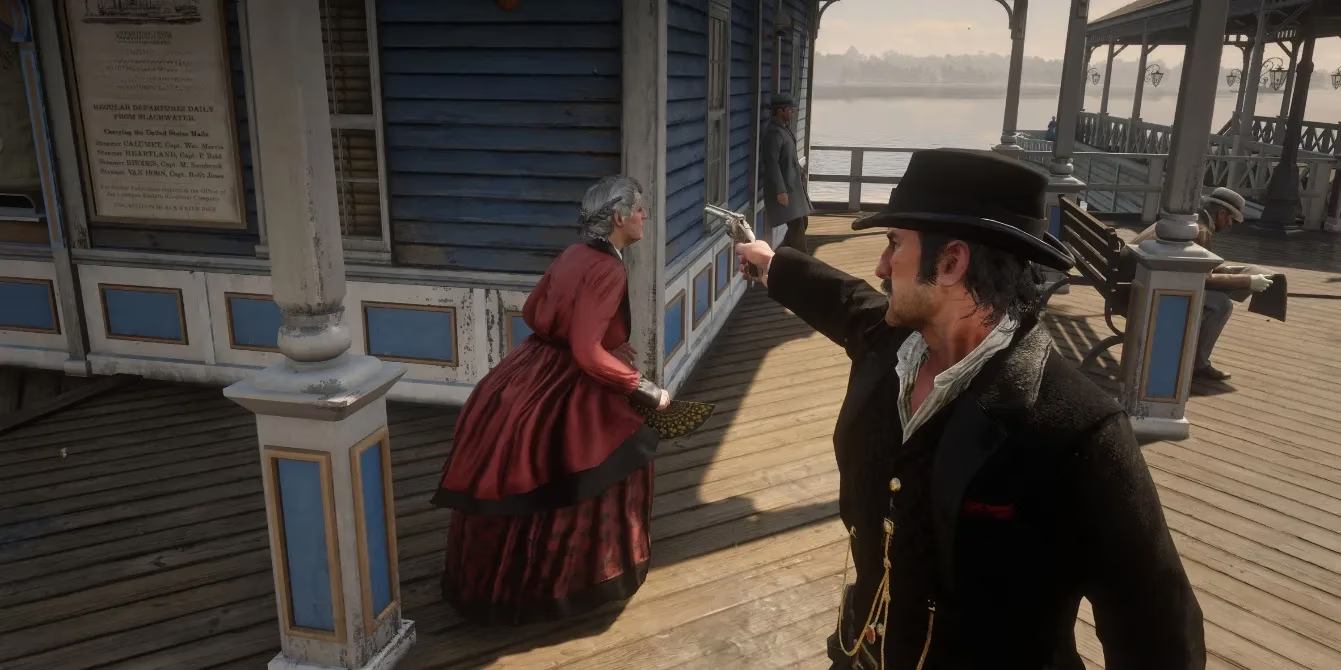
The Blackwater massacre haunts me like Dutch's conscience should have haunted him. That moment he executed Heidi McCourt—an innocent woman during that botched ferry heist—wasn't just violence; it revealed the rot beneath his charming facade. His gang saw a revolutionary, but I see a hypocrite who'd already chosen self-preservation over principles. People often ask: Was Dutch always evil, or did circumstances create his monstrosity? For me, Blackwater was the first domino—proof his "noble outlaw" persona was performative theater.
Then came Saint Denis. That trolley crash! When Angelo Bronte manipulated Dutch into that disaster, the head injury changed everything. I remember Dutch seeing triple vision, slurring words, struggling with basic decisions—classic traumatic brain injury symptoms. Could this physical trauma have rewired his moral compass? Medical journals suggest frontal lobe damage impacts impulse control and empathy. Suddenly, Dutch's erratic choices made terrifying sense:
-
Paranoia replacing calculated leadership
-
Rash violence overriding strategic thinking
-
Emotional detachment from his "family"
Losing Hosea felt like watching Dutch's soul get amputated. For decades, they balanced each other—Dutch's fiery ambition tempered by Hosea's wisdom and ethics. With Agent Milton's bullet, Dutch lost his only true equal. What followed was a leadership vacuum that Micah Bell slithered into like poison. I've wondered endlessly: Why did Dutch embrace Micah's toxicity after Hosea's death? Without his moral anchor, Dutch became a ship adrift, vulnerable to manipulation by anyone feeding his ego.
Micah became Dutch's twisted mirror—amplifying his worst instincts while isolating him from loyalists like Arthur. That infamous camp argument where Dutch watches Micah and Arthur clash? It symbolizes his choice: the sycophantic snake offering easy validation versus the truth-telling brother demanding accountability. Dutch picked the liar because facing reality meant acknowledging his failures. As Micah whispered sweet nothings about loyalty and strength, Dutch's philosophy warped:
| Dutch's Ideals (Pre-1899) | Dutch's Reality (Post-Hosea) |
|---|---|
| "We save folks" | "We shoot folks" |
| Family above all | Self above family |
| Freedom from tyranny | Tyranny disguised as freedom |
Dutch's hatred of civilization wasn't just political—it was existential terror. Watching him stare at Saint Denis' smokestacks, I sensed a man realizing his entire worldview was obsolete. The Pinkertons weren't just enemies; they were grim reapers for his outlaw fantasy. When Arthur pleads "We're ghosts fighting gravity," Dutch hears his own irrelevance. This cognitive dissonance broke him—how do you lead when your purpose is extinct? People also ask: Did Dutch truly believe his ideals, or were they justifications for chaos? I think he believed until belief became too painful.
That moment Dutch snarled at the word "insist"? Pure ego shattering. His leadership depended on unchallenged authority—when gang members questioned him, he didn't debate; he punished. Without blind faith, Dutch had nothing left but survival instincts stripped of humanity. The money was gone, the plans failed, and the doubters multiplied. Facing his own inadequacy, he chose brutality over redemption.
So what truly corrupted Dutch? Was it:
-
🧠 Physical trauma altering his brain?
-
💔 Hosea's death removing his conscience?
-
🐍 Micah's manipulation exploiting his weakness?
-
🌆 Society's progression invalidating his existence?
I've concluded it was all these wounds festering together—a perfect storm of betrayal, injury, and obsolescence. But here's what still keeps me up at night: If we'd seen Dutch's story first without knowing his end in Red Dead Redemption, would we have recognized the monster emerging? Or would we, like Arthur, have made endless excuses for our beloved leader's descent? Perhaps that's Rockstar's darkest truth: evil isn't born—it's curated by choices we refuse to confront until it's too late.
Comments