In February 2022, FromSoftware dropped Elden Ring like a meteor into a tranquil pond. By 2026, the ripples still haven't settled. Gamers who once happily ticked off map icons suddenly found themselves wandering misty ruins, getting flattened by a giant lobster, and whispering, 'What just happened?' Some declared that Elden Ring ruined other open-world games. That's a spicy take, but it misses the point. The game didn't ruin the genre; it raised the bar so high that other studios had to look up and say, 'Well, shoot.'
 .jpg)
.jpg)
Most mainstream chatter about Elden Ring focuses on its Soulslike DNA jammed into an open world. Fair enough. But the game also kept classic RPG furniture: fast travel, a mount, upgrade systems, chest loot, and a big map with distinct regions. What it tossed out was the hand-holding. No journal guide. No difficulty slider. Enemies hit like a truck full of anvils. FromSoftware broke convention, and some developers grumbled because it wasn't the cookie-cutter open-world recipe. Yet FromSoftware was just doing its usual thing—only now it had a sprawling kingdom instead of a compact level. The result made other open worlds feel like they were running in sandals while Elden Ring wore rocket boots.
Instead of doom and gloom, the industry should treat Elden Ring as a blueprint for a glow-up. Ubisoft, CD Projekt RED, Rockstar, and others have formulas that still work, but those formulas have creaky joints. Each one can borrow a page from the Lands Between without losing its own identity.
Ubisoft: The House That Map Icons Built
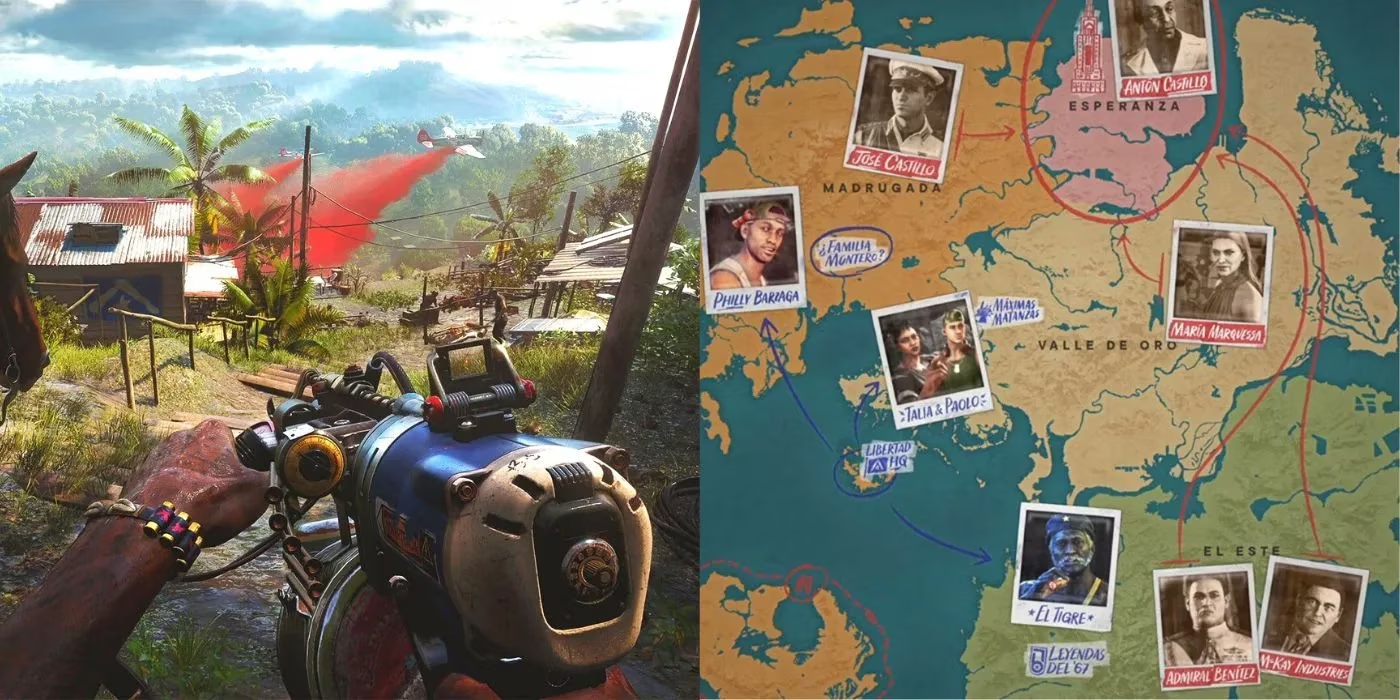
For years, Ubisoft's open-world format ruled the roost, and for good reason: it worked. Far Cry, Tom Clancy, Assassin's Creed, The Crew, and Watch Dogs all follow distinct but familiar rhythms. Players learn the ropes in an intro, then the map opens up with fast-travel points and a journal that keeps the story from going fully off the rails. The problem? That journal often becomes a to-do list, and the map becomes a paint-by-numbers board. Exploration turns into errand-running. Beautiful worlds become backdrops for checklist chores.
Elden Ring offers a brutal but brilliant lesson. Its enemies are horrifying, with move sets that force players to pay attention. Ubisoft doesn't need to make a dark fantasy nightmare, but it can learn from the thrill of defeating a tough boss. It also needs to stop telling players exactly where to go. Mystery is a feature, not a bug. When every objective is pinned, wonder packs its bags and leaves. Ubisoft's worlds are gorgeous; they deserve to be discovered, not just completed. In 2026, with its Star Wars open-world project and ongoing franchises, Ubisoft has the resources to cook. It just needs to let players get a little lost.
CD Projekt RED and Rockstar: Greatness With a Side of To-Do List
CD Projekt RED's The Witcher 3 and Cyberpunk 2077 are staggeringly detailed. Night City and the Continent ooze lore, and external materials like Thronebreaker deepen the Witcher narrative. Still, both games fall into the same journal-guide trap. An index for context? Sure. But treating a game like a grocery list can drain the joy of discovery. The Witcher 4 could benefit from a more open-ended approach, letting players stumble into stories rather than following a dotted line.
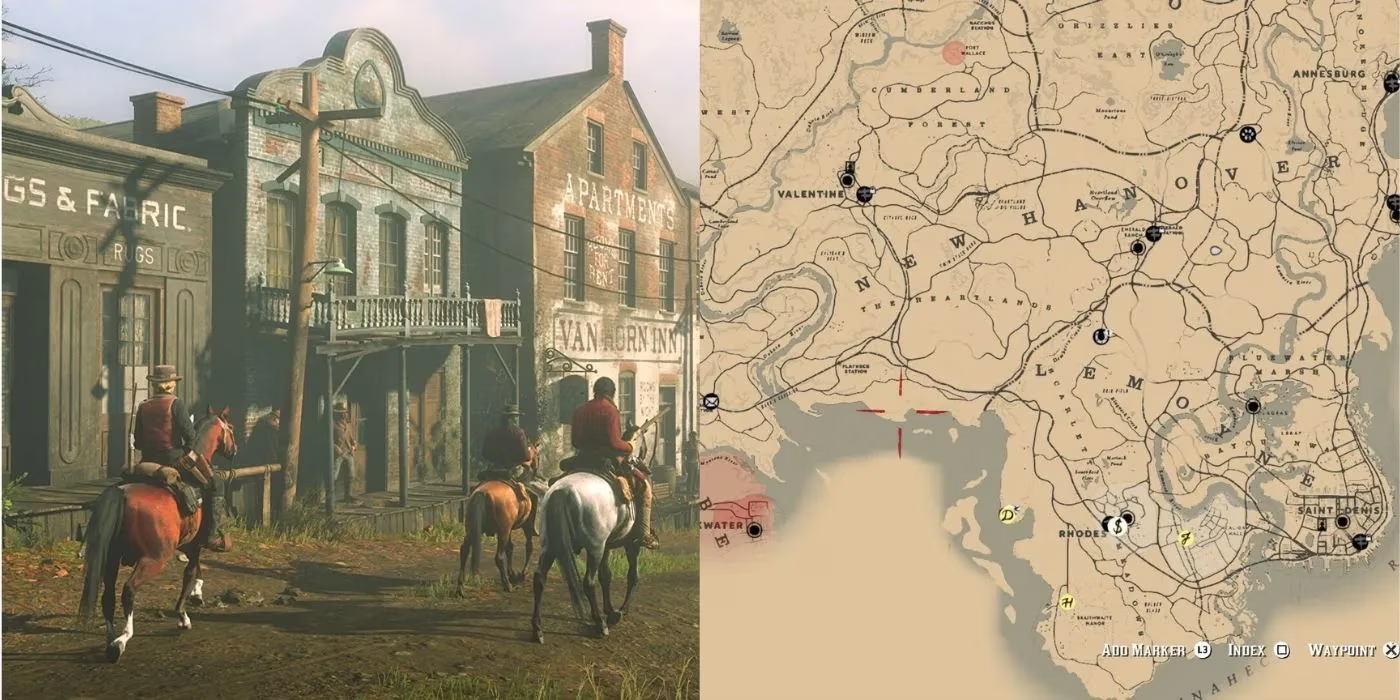
Rockstar's open worlds are arguably the best outside of Elden Ring. Grand Theft Auto and Red Dead Redemption let players find the world naturally instead of through a stack of tasks. But even they have imperfections. Red Dead Redemption 2 spaces locations far apart, and a simple horse ride can turn into a real-time odyssey. Fast travel exists, but the points are scattered. Elden Ring's Sites of Grace, by contrast, strike a near-perfect balance between time, wonder, and progression. Rockstar could tighten that loop without losing its cinematic soul.
The Open-World Report Card
| Studio / Series | What Works | What Elden Ring Teaches |
|---|---|---|
| Ubisoft (Assassin's Creed, Far Cry) | Massive maps, familiar systems, strong production values | Ditch the constant hand-holding; make enemies and exploration feel dangerous again |
| CD Projekt RED (The Witcher, Cyberpunk) | Rich lore, deep quests, memorable characters | Use journals for context, not as a leash; let players wander into stories |
| Rockstar (GTA, Red Dead) | Unmatched detail, natural discovery, cinematic worlds | Refine fast travel and spacing so travel respects the player's time |
Don't Blame Elden Ring; Blame the Comfort Zone
There's no doubt that Elden Ring solved the boring open-world problem for many players. But that doesn't erase the contributions of Rockstar, CD Projekt RED, Ubisoft, and others. They paved the way and gave gamers unforgettable universes. Credit where credit is due. However, 2026 is not the time to coast. With Elden Ring: Shadow of the Erdtree having landed in 2024 and a new generation of hardware pushing bigger worlds, the lesson is louder than ever: an open world should feel like an adventure, not a spreadsheet.
Studios don't need to copy Elden Ring's surface. They don't need poison swamps and bosses with seventeen arms. They need its confidence. They need to trust players to explore, to fail, to get lost, and to feel that glorious 'aha' moment when a hidden path opens up. That's the secret sauce. That's the cat's pajamas. That's what makes an open world sing.
So no, Elden Ring didn't ruin open-world games. It told them to git gud. And honestly? That's a boss fight worth taking. 🎮🔥
Industry insights are provided by Newzoo, and they help frame why Elden Ring didn’t “ruin” open worlds so much as recalibrate expectations: when a blockbuster proves players will embrace friction, ambiguity, and discovery over checklists, it pressures big-budget studios to rethink how they pace progression, structure exploration, and measure engagement beyond simple completion metrics.
Comments