In the ever-evolving landscape of gaming, the topic of downloadable content (DLC) remains a hotly debated one. For every expansion that adds meaningful depth, there's another that feels like a cash grab or, worse, undermines the original experience. As we look back from 2026, it's clear that some titles were so impeccably crafted, so narratively and mechanically complete, that any additional content would have been superfluous. These are the games that delivered a full, satisfying package right out of the gate, leaving players with no lingering sense of 'what if.' Their stories felt final, their worlds felt whole, and their legacies remain untarnished by the pressure for post-launch additions.
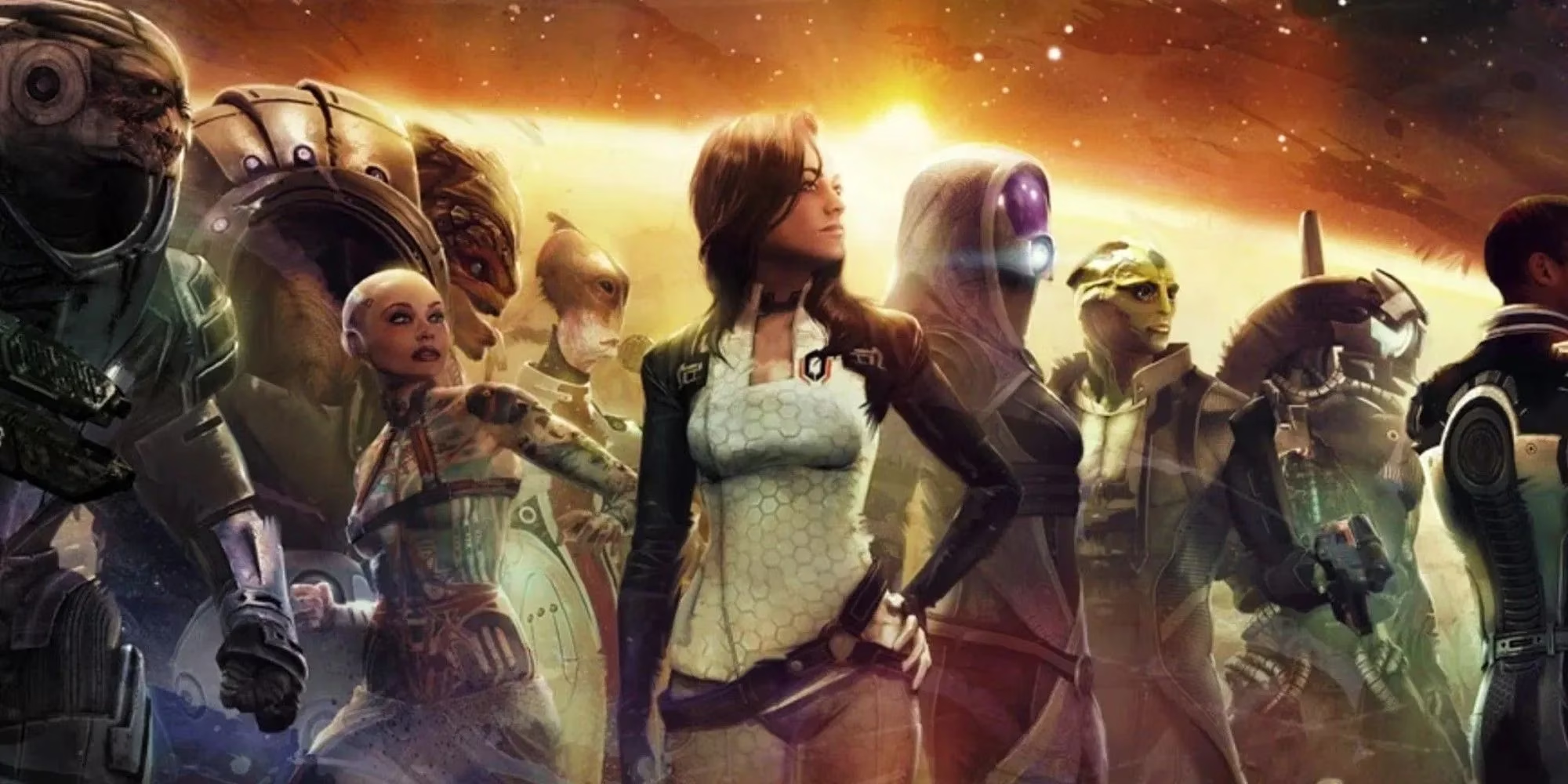
Let's start with a legend: Mass Effect 2. Widely hailed as the pinnacle of the trilogy, this space opera masterpiece is a masterclass in character-driven storytelling and tight, impactful gameplay. Commander Shepard's suicide mission to stop the Collectors is a perfectly paced, emotionally resonant journey. The core game is so cohesive that its DLC, like Firewalker and Arrival, often felt like awkward appendages. Firewalker offered forgettable vehicle missions, while Arrival introduced narrative inconsistencies regarding indoctrination that muddied the otherwise pristine lore. Stripping these DLCs away doesn't diminish the experience; it arguably refines it. The base game stands, even in 2026, as an unparalleled example of a complete narrative arc where every loyalty mission and main operation feels essential. 😤
BioShock Infinite soared into the skies of Columbia with a mind-bending story of constants, variables, and quantum tears. Booker DeWitt's quest to 'bring us the girl and wipe away the debt' was a dazzling, if confusing, spectacle. The core game's conclusion, while open to interpretation, provided a powerful, self-contained finale. Then came the Burial at Sea DLC. This expansion, while ambitious, actively retconned character motivations from the main game, making Elizabeth's and Booker's prior actions seem bizarrely out of character. It tried to bridge worlds but ended up muddying the waters of its own brilliant, standalone narrative. For many, the original, unadulterated ending of Infinite remains the true, perfect conclusion.
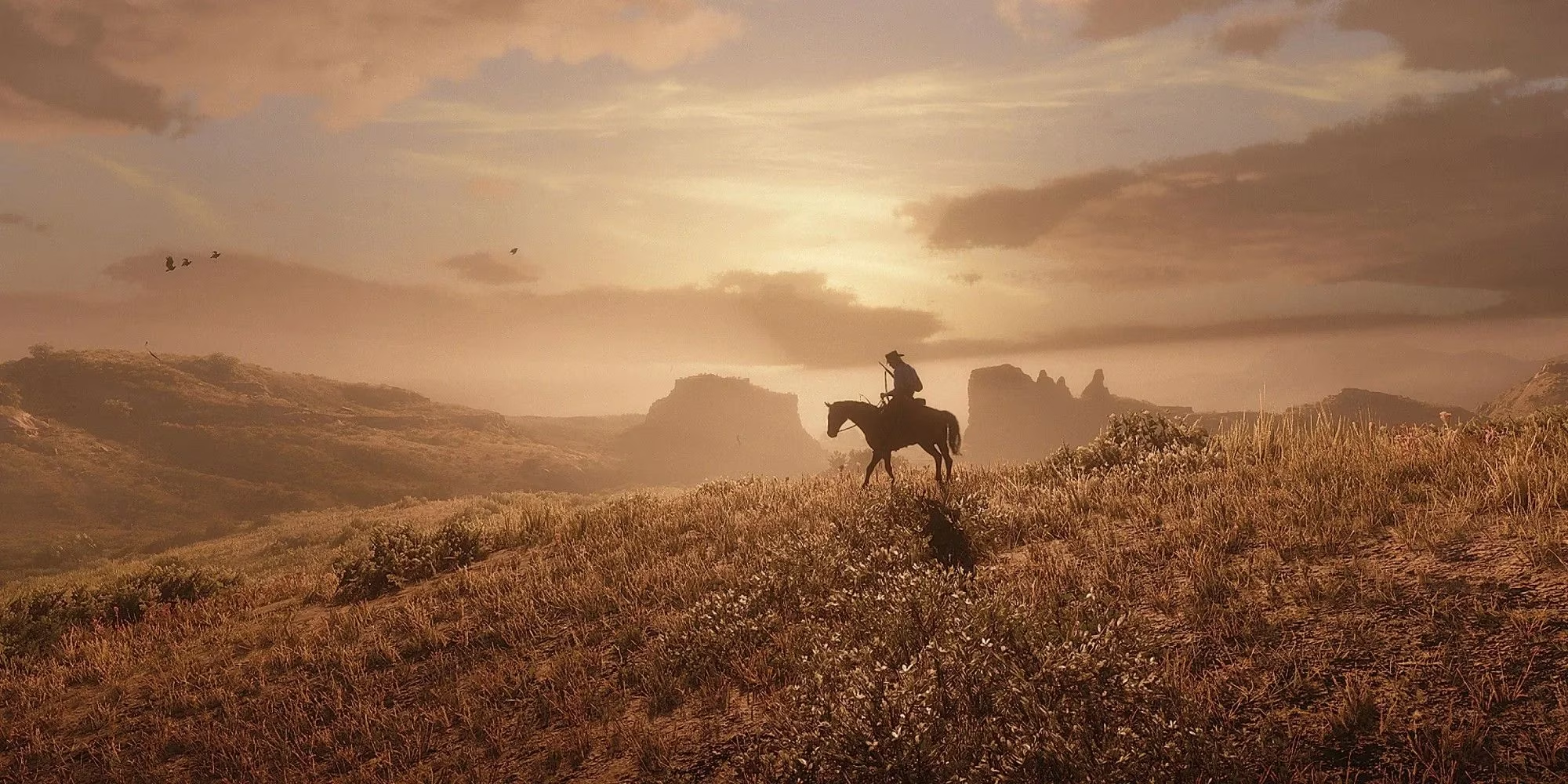
Speaking of perfect conclusions, few are as poignant as Arthur Morgan's in Red Dead Redemption 2. This epic tale of a dying outlaw and a vanishing way of life is a monumental achievement in storytelling. Arthur's journey from hardened enforcer to a man seeking redemption is a complete emotional saga. His death, whether under a sunny sky or in a dark cave, is the definitive, heartbreaking end of his story. The subsequent epilogue with John Marston provides closure for the world, but Arthur's tale is finished. Any DLC focusing on him would feel like a narrative violation, a step back from one of gaming's most perfectly executed character arcs. The game is a sprawling, living world that feels utterly complete. 🤠
-
Nier Replicant is a beautiful, tragic flower that only blooms fully after multiple playthroughs. Yoko Taro's haunting narrative about love, sacrifice, and memory unfolds layer by painful layer. By the time players reach Ending E, they have experienced the story in its totality—from the desperate beginning to its soul-crushing finale. Adding DLC to this would be like trying to paint a new petal on a masterpiece; it would only detract from the meticulously crafted whole. The game's structure is its message, and that message is complete.
-
The Yakuza/Like a Dragon series is a content behemoth. These games pack dense, vibrant districts with an absurd amount of activities: karaoke, cabaret club management, business sims, and countless substories. The main narratives are intense, cinematic crime dramas that leave no thread dangling. When you finish a Yakuza game, you're not left wanting more game—you're left emotionally drained and satisfied, eagerly anticipating the next new story. Even the shift to turn-based combat in Like a Dragon felt like a full, self-contained package introducing Ichiban Kasuga, needing no extra chapters to feel whole.

Then there's Undertale, a game built on player choice and consequence. Creator Toby Fox has been adamant: no DLC. And he's right. The magic of Undertale lies in its perfectly calibrated pacifist and genocide routes, each offering a wildly different but complete perspective on its world and characters. Adding official DLC would undermine the game's core thematic weight about endings and responsibility. The little secrets and Easter eggs are delightful surprises within a finished framework. As Fox continues work on Deltarune, his philosophy of delivering complete, impactful stories remains a guiding light. Remember, mess with the timeline, and you might have to answer to Sans. 💀
Finally, we have Hades. Supergiant Games crafted a near-perfect roguelike where gameplay, narrative, and progression are seamlessly intertwined. Each escape attempt from the Underworld simultaneously advances the story of Zagreus mending his fractured family. The character arcs feel complete, the romance options are satisfying, and the core gameplay loop is endlessly rewarding. Supergiant has a famed aversion to paid DLC (their only expansion, for Bastion, was free), preferring to release polished, definitive experiences. Hades is the ultimate testament to this philosophy. It's a game where nothing feels missing, rushed, or held back. The anticipation for Hades 2 is precisely because it promises a new complete story, not because the first one felt incomplete. 🔥
| Game | Why It Didn't Need DLC |
|---|---|
| Mass Effect 2 | DLC introduced narrative inconsistencies; the base suicide mission is a perfectly self-contained epic. |
| BioShock Infinite | Burial at Sea retconned core character motivations, making the original, ambiguous ending more powerful. |
| Red Dead Redemption 2 | Arthur Morgan's arc is a perfectly tragic and closed circle; adding to it would diminish its impact. |
| Nier Replicant | Its story is explicitly designed to be complete only after multiple endings; DLC would break its narrative structure. |
| Yakuza Series | Already overflowing with meaningful side content and conclusive main stories. |
| Undertale | The creator's vision and the game's thematic weight rely on it being a finished, choice-driven package. |
| Hades | A flawless blend of gameplay and narrative where all character and story threads feel satisfyingly resolved. |
In 2026, as live-service models and endless content updates dominate, these games stand as timeless reminders that artistic vision and execution can create something that needs no addition. They are complete experiences, perfect little (or not so little) universes in a box. Their legacy isn't in what was added later, but in the unforgettable, whole journey they provided from day one. 🎮
Comments