In the sprawling, immersive world of Red Dead Redemption 2, the classic card game of Poker offers more than just a diversion—it's a legitimate way for Arthur Morgan or John Marston to line their pockets with some extra cash. While the main story is filled with high-stakes drama and intense shootouts, sitting down at a felt-covered table provides a different kind of tension, one built on bluffing, strategy, and a keen understanding of the odds. For players in 2026, whether they're revisiting this masterpiece or experiencing it for the first time, mastering Poker is a rewarding side pursuit that requires a blend of patience, observation, and smart betting. The game faithfully replicates the nuances of Texas Hold 'Em, making it a perfect pastime for aspiring digital card sharks. 🃏
Understanding the Core Rules and Hand Rankings
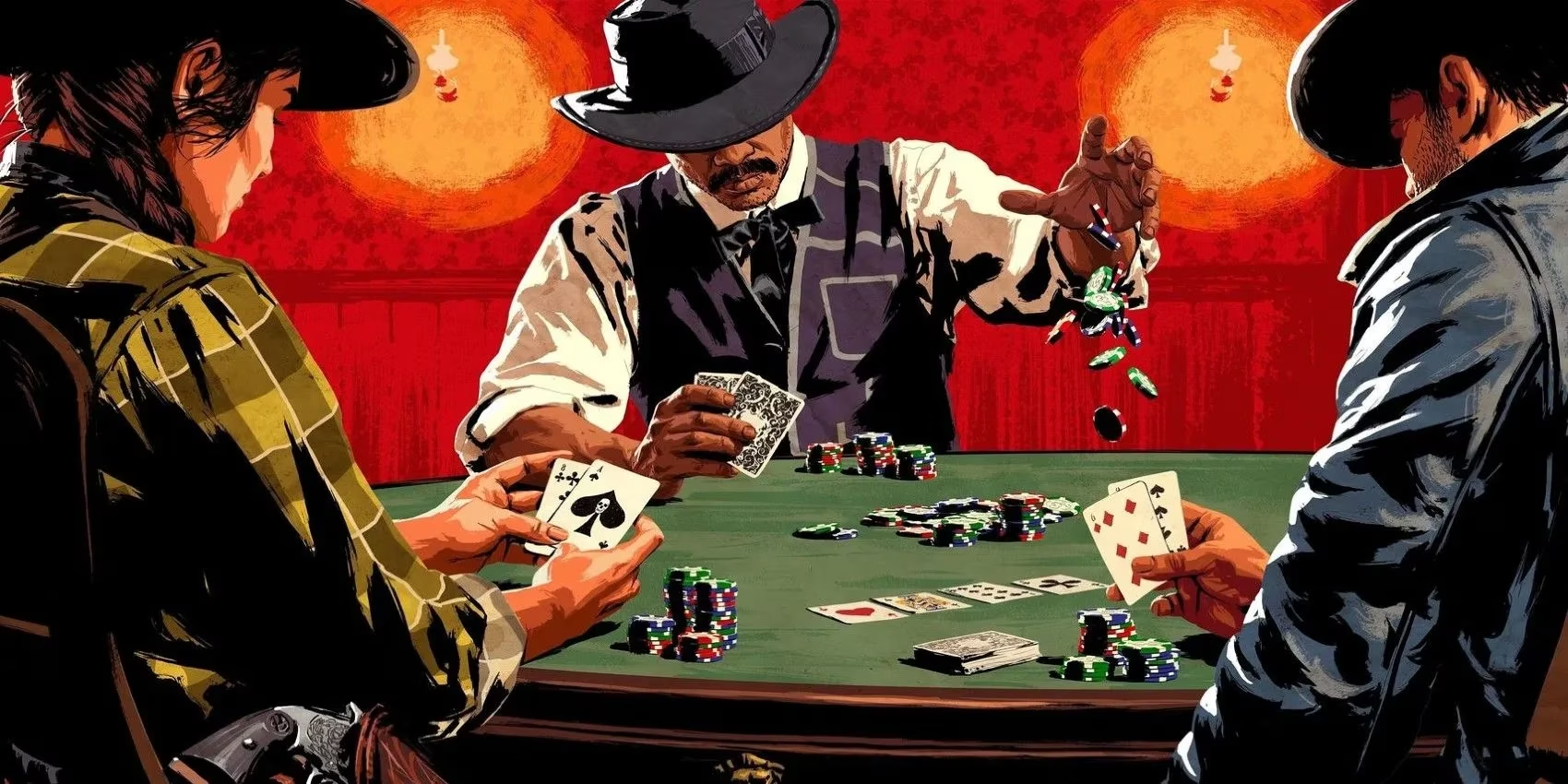
The foundation of success in Red Dead Redemption 2's Poker lies in a solid grasp of Texas Hold 'Em rules. Each player is dealt two private cards, known as "hole cards." Over the course of the betting rounds, five community cards are dealt face-up in the center of the table. The objective is simple: construct the best possible five-card hand using any combination of your two hole cards and the five community cards. The betting structure is methodical, with rounds occurring after the initial deal, after the first three community cards (the "flop"), after the fourth card (the "turn"), and after the fifth and final card (the "river").
Knowing the hierarchy of poker hands is non-negotiable. Here is the ranking from the most powerful to the weakest:
-
Royal Flush: The unbeatable hand—A, K, Q, J, 10, all of the same suit.
-
Straight Flush: Any five consecutive cards of the same suit (e.g., 7, 8, 9, 10, J of hearts).
-
Four of a Kind: Four cards of the same rank.
-
Full House: A combination of Three of a Kind and a Pair.
-
Flush: Any five cards of the same suit, not in sequence.
-
Straight: Any five consecutive cards of mixed suits.
-
Three of a Kind: Three cards of the same rank.
-
Two Pair: Two different pairs of cards.
-
One Pair: A single pair of cards of the same rank.
-
High Card: When you have none of the above, the highest card in your hand determines its value.
The game interface helpfully displays your current hand's potential, but true mastery comes from understanding how the community cards can improve it for you—and for your opponents.
The Art of Strategic Betting: When to Hold 'Em and When to Fold 'Em
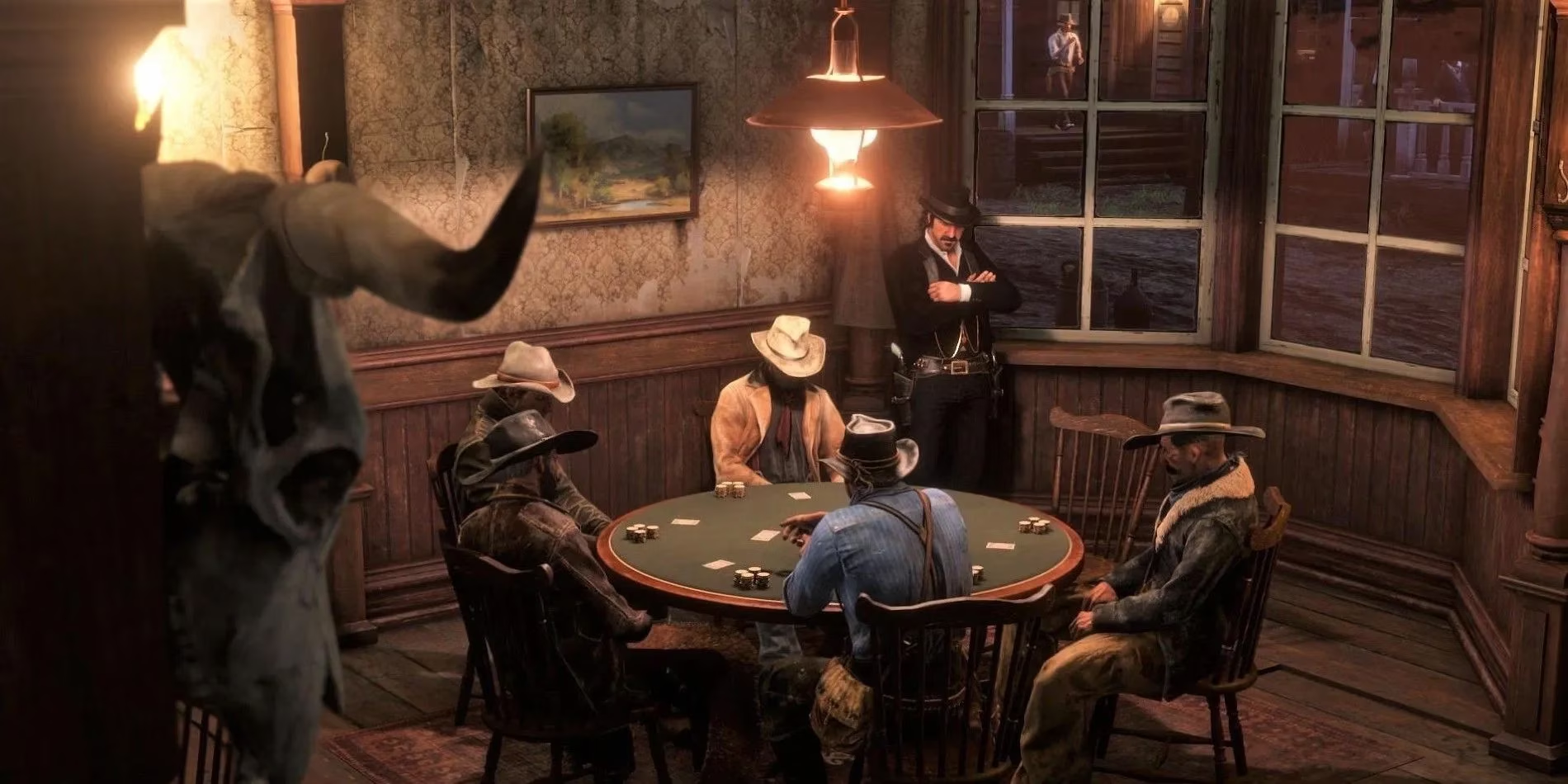
Betting is the heartbeat of Poker. It's not just about the cards you hold; it's about the story you tell with your chips. A cautious, defensive approach is wise when your hand is weak. If you're holding nothing but a High Card or a low One Pair after the flop, it's often best to check or call small bets rather than raise. This minimizes your losses while allowing you to see if the turn or river cards miraculously improve your situation. Paying close attention to the betting patterns of Non-Playable Characters (NPCs) is crucial. A player who suddenly makes a large raise might be bluffing, but they could also be sitting on a powerful hidden hand like a Straight or a Flush.
Conversely, when fortune smiles upon you with a strong hand, aggression pays dividends. Betting and raising aggressively with a Three of a Kind or better serves two purposes: it builds the pot you're likely to win, and it pressures opponents with weaker hands to fold, thereby reducing competition. Even a well-timed bluff, representing a hand stronger than what you actually hold, can force others out of the round. However, a word of caution for players in 2026: unlike in some older western games or the original Red Dead Redemption, cheating is absolutely impossible in this iteration. No special outfit or hidden mechanic will give you an edge; getting caught trying would only result in a bounty and a hail of bullets. The only "illegal" move is to resort to violence at the table, which, while an option, turns the game into a chaotic shootout and ruins any chance of a peaceful card game.
Finding the Right Table: Locations and Logistics
Poker tables are scattered across the states of New Hanover, Lemoyne, and West Elizabeth, offering varied stakes and atmospheres. Knowing where to go is half the battle.
| Location | Betting Buy-in (2026) | Availability | Notes |
|---|---|---|---|
| Valentine | $2.50 | Arthur & John | A classic saloon setting, good for low-stakes practice. |
| Flatneck Station | $2.50 | Arthur & John | A quieter, less crowded table. |
| Tumbleweed | $2.50 | Primarily John (Epilogue) | A true frontier experience in the desert. |
| Saint-Denis | $5.00 | Arthur & John | High-stakes games in the sophisticated, bustling city. |
| Blackwater | $5.00 | John (Epilogue only) | Arthur cannot play here due to the story bounty. |
| Van der Linde Camp | Variable | Arthur (Chapter-specific) | Occasional games with gang members; buy-in varies. |
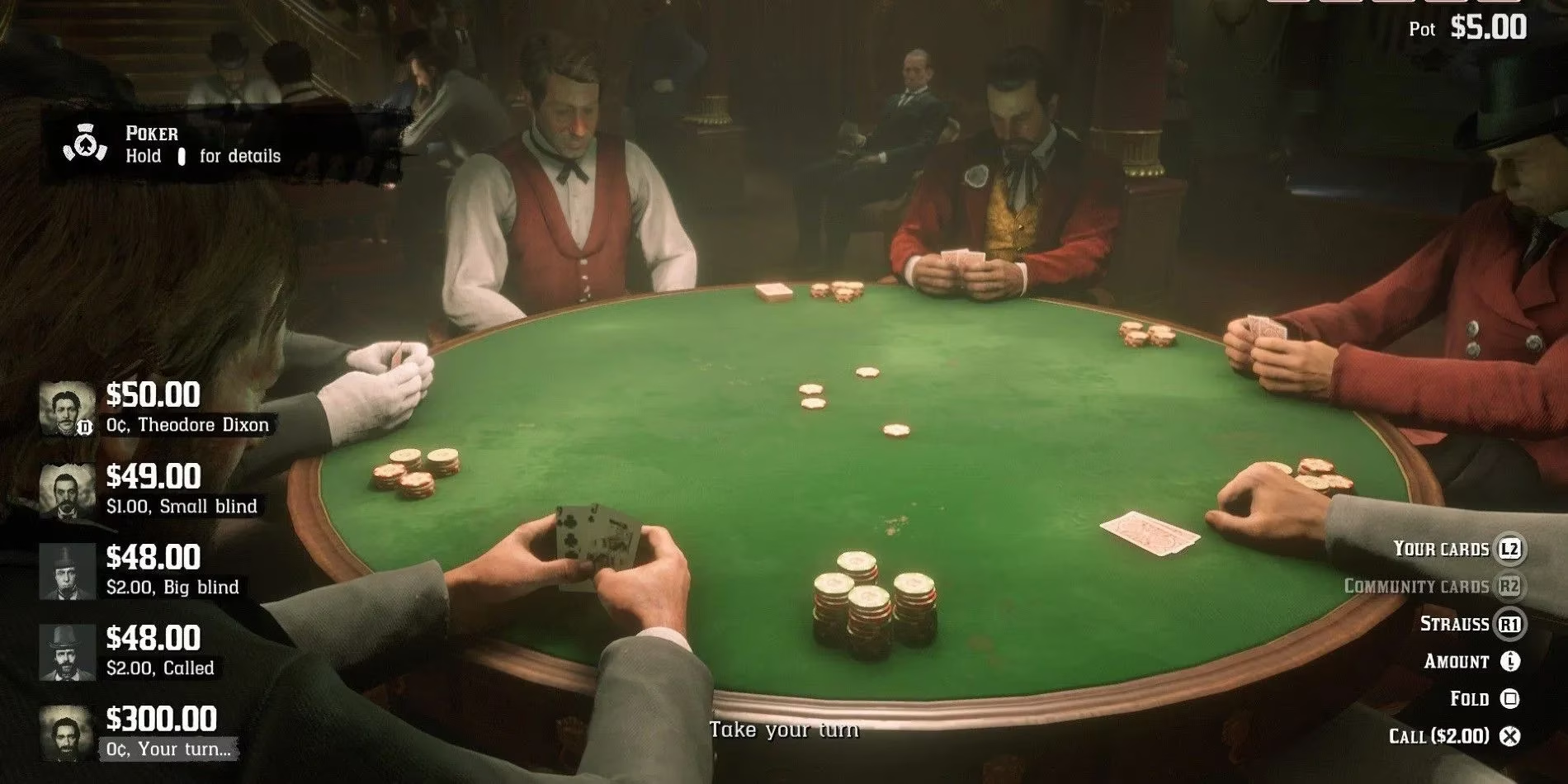
The Saint-Denis and Blackwater tables offer the highest stakes, with a $5.00 buy-in, attracting seemingly tougher opponents and the potential for bigger wins. For players progressing through the story, remember that Blackwater is off-limits to Arthur Morgan for most of the game, but becomes accessible for Poker (and other activities) during the epilogue as John Marston. The occasional games at the gang's camp provide a more personal, low-pressure environment to hone your skills against familiar faces like Dutch, Hosea, and Uncle.
Pro Tips for the Modern Cowboy Card Shark
Beyond the basics, a few advanced strategies can significantly increase your win rate. First, practice bankroll management. Don't bet your entire wallet on a single hand. Start at the $2.50 tables in Valentine to build confidence and a small fortune before taking on the wealthier patrons of Saint-Denis. Second, observe your opponents' "tells." While not as pronounced as in a live game, NPCs have behavioral patterns. A player who consistently checks might be playing cautiously, while one who frequently raises pre-flop might be overconfident or bluffing. Third, don't be afraid to fold a good hand. If the community cards on the table suggest a high probability of a flush or straight, and the betting becomes furious, your Two Pair might not be enough. Saving your money for a more certain victory is a sign of a disciplined player. Finally, remember that Poker in Red Dead Redemption 2 is as much about the experience as it is about the money. The ambient saloon chatter, the clinking of glasses, and the tense silence before a reveal are all part of the game's incredible immersion. So, saddle up, find a table, and may the cards be ever in your favor. 🤠
Data referenced from PEGI helps contextualize why Red Dead Redemption 2 presents poker as a grounded, rules-faithful side activity: the game’s mature framing of gambling and saloon play reinforces that your edge comes from disciplined decision-making—tight starting-hand selection, careful pot-odds awareness across flop/turn/river, and knowing when rising aggression likely signals real strength rather than a cheap bluff.
Comments