As a dedicated gamer, I've always found a unique solace in the virtual act of fishing. It's a mechanic that has transcended its role as a mere minigame, blossoming into a genre of its own, one that captures the soul of angling with startling fidelity. From the pixelated shores of early titles to the breathtaking, almost tangible waters of today's simulators, fishing in games has evolved from a simple pastime into a profound digital art form. My journey through these virtual waters has been one of discovery, where the tug of a line feels less like a controller vibration and more like a genuine connection to another world. These games are not just about catching fish; they are about capturing a moment, a feeling—the quiet anticipation that hangs in the air like morning mist, the sudden, electric thrill of a bite. They are a digital sanctuary, a place where the chaos of the world fades into the gentle lapping of waves against a virtual hull. In 2026, this genre has matured, offering experiences so rich and detailed that they feel less like playing a game and more like stepping into a parallel, piscatorial life.
The Pioneers: Casting the First Line
My adventure began with the legends, the titles that defined what realistic fishing could be. Rapala Pro Bass Fishing was a revelation when I first experienced it. Released back in 2010, it wasn't just a game; it was an event. I remember the innovative wireless rod controller, a peripheral that felt like holding a wand of pure potential. It faithfully recreated the tension of a fish on the hook—a sensation that was like feeling a tiny, struggling heartbeat transmitted through a fiberglass spine. The game set a graphical standard that, for its time, was like looking through a polished aquarium glass into another world. Its fully commentated tournaments pitted me against pro anglers, making every cast feel like a high-stakes duel on a liquid chessboard. 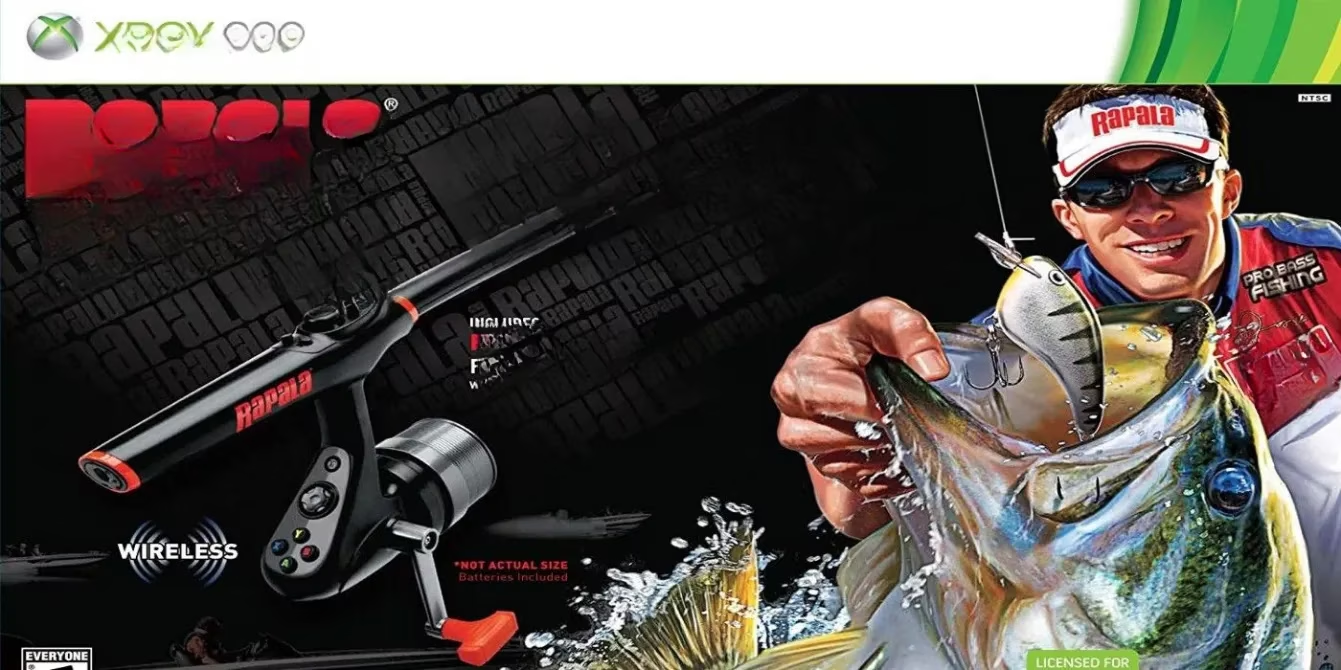
This title established the core pillars of the genre:
-
Authentic Gear Simulation: The tactile feedback of the rod.
-
Competitive Structure: Tournament modes with professional commentary.
-
Scenic Realism: Environments that felt alive and fishable.
It was a foundation upon which everything else was built, proving that fishing could be the main attraction, not just a side activity.
The Modern Masters: A Sea of Possibilities
Fast forward to the present, and the landscape is vast and varied. Today's fishing games are ecosystems, teeming with life and detail.
Fishing Planet was my introduction to the social side of digital angling. This online multiplayer game is a vibrant, living world. Hopping into a boat with up to three friends, we'd explore its stunning, diverse environments—from serene lakes to choppy open seas. The dynamic weather and seasons meant no two trips were ever the same. Catching one of over 200 fish species felt like completing a page in a constantly expanding encyclopedia. The multiplayer wasn't just an add-on; it was the heart of the experience, transforming a solitary hobby into a shared adventure. 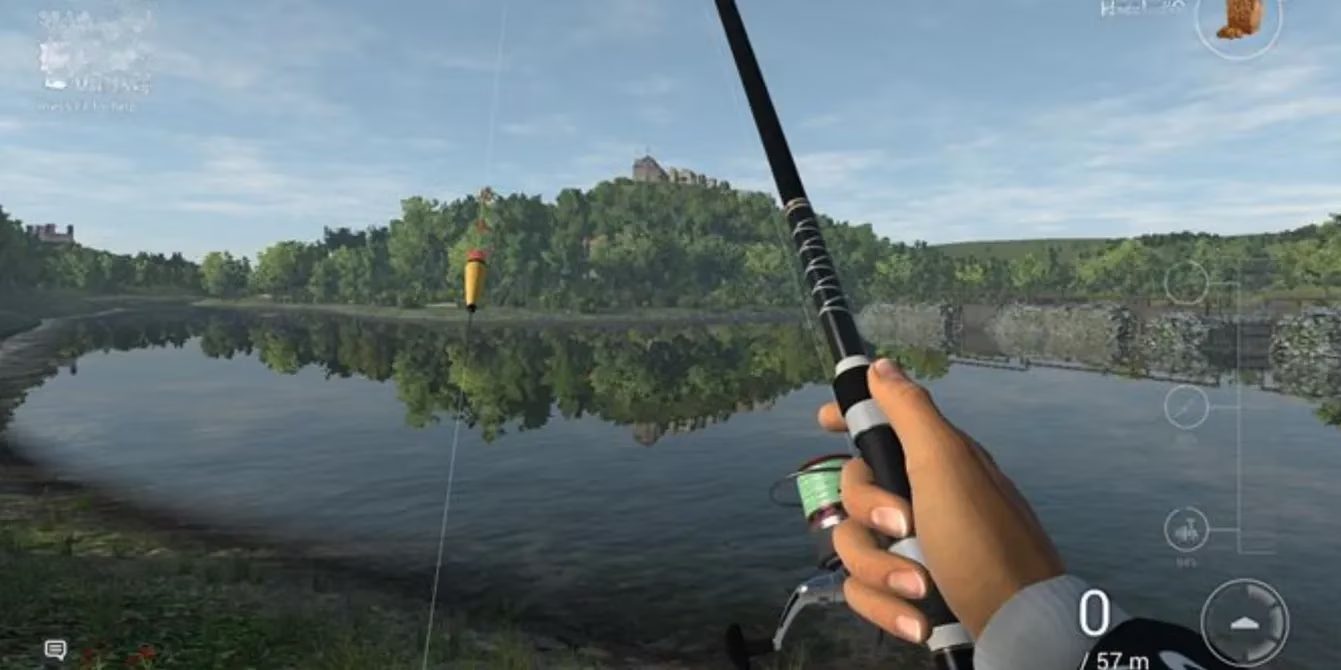
Then there's the masterpiece that is Red Dead Redemption 2. While not a dedicated fishing title, its implementation is, in my opinion, the most graphically stunning in existence. Casting a line into its rivers as Arthur Morgan is a meditation. The water physics, the light play, the detailed animations of the fish—it's all a technical marvel. Catching the 15 species, especially the elusive legendary fish that require special lures, is a pursuit that feels woven into the fabric of the game's world. It’s a reminder that sometimes, the most realistic fishing experience can be found in the unlikeliest of places, nestled within a grand tale of outlaws and redemption. 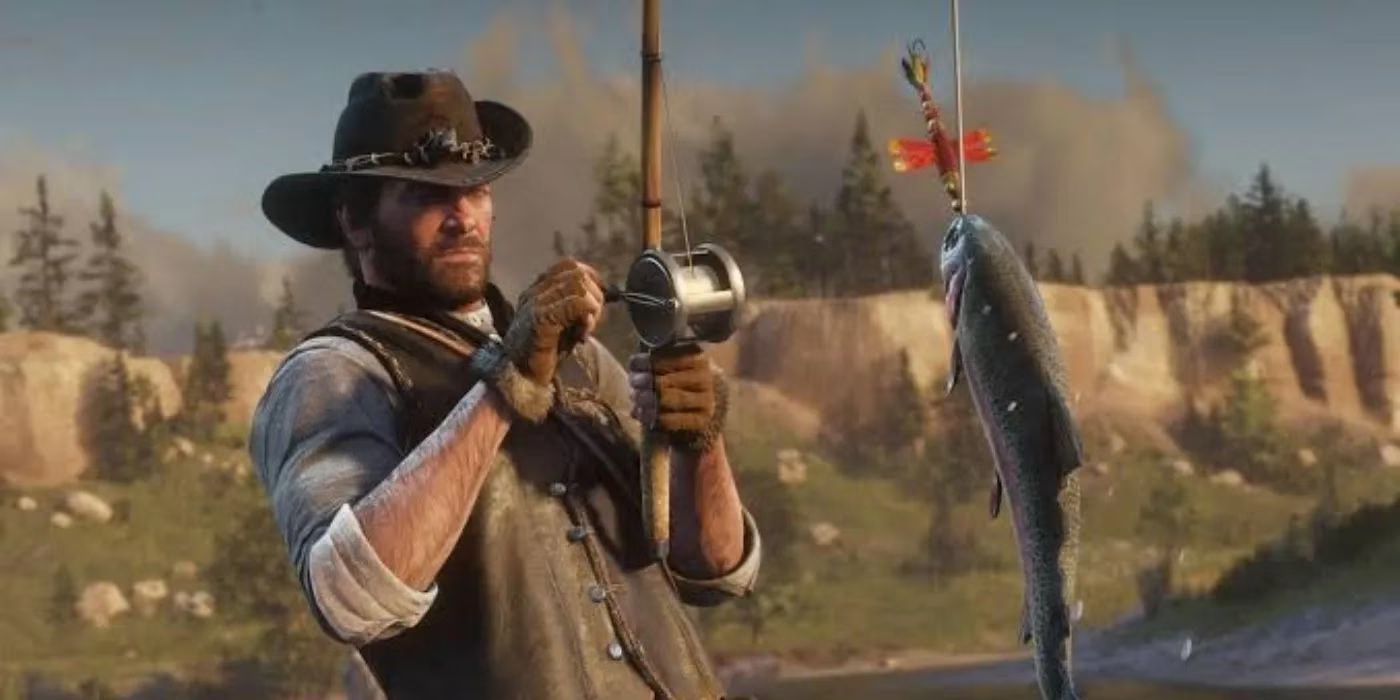
For the competitive angler in me, Fishing Sim World: Pro Tour is the ultimate test. It took the tournament concept pioneered by Rapala and built an entire career around it. Managing sponsorships, building a social media following, and climbing the ranks felt less like playing a game and more like living a digital sports drama. The ability to create custom tournaments with friends added a layer of intense, personal rivalry. Knowing that real fishing legends like Ali Hamidi endorsed it gave every victory a special weight—it was like receiving a silent nod of approval from a master craftsman.
Specialized Depths: Niche Realism
The beauty of the modern fishing sim genre is its willingness to explore every corner of the angling world.
Fishing: North Atlantic is a beast of a different nature. This isn't about relaxation or sport; it's about commerce and survival. As a commercial fishing simulator, it tasks you with running a business on the treacherous North Atlantic. Upgrading your boat from a rickety tub to a industrial-grade trawler is a grind, but the progression is deeply satisfying. The focus on profit, yield, and equipment management makes it the most authentic commercial fishing experience available—a game where the catch is a commodity, and the sea is both your employer and your greatest adversary.
On the opposite end of the spectrum lies Call of the Wild: The Angler. This game is pure, unadulterated exploration. Its open world is a place to get lost in, either alone or with up to 11 friends. Traveling on foot, by 4x4, or by boat to find the perfect spot is as much a part of the game as the fishing itself. The customization of rigs and gear is incredibly deep, allowing for a personal touch on every expedition. Hunting for legendary fish in its vast wilderness feels like a quest from an angler's fairy tale. It captures the spirit of adventure that underpins real-world fishing, where the journey is just as important as the destination. 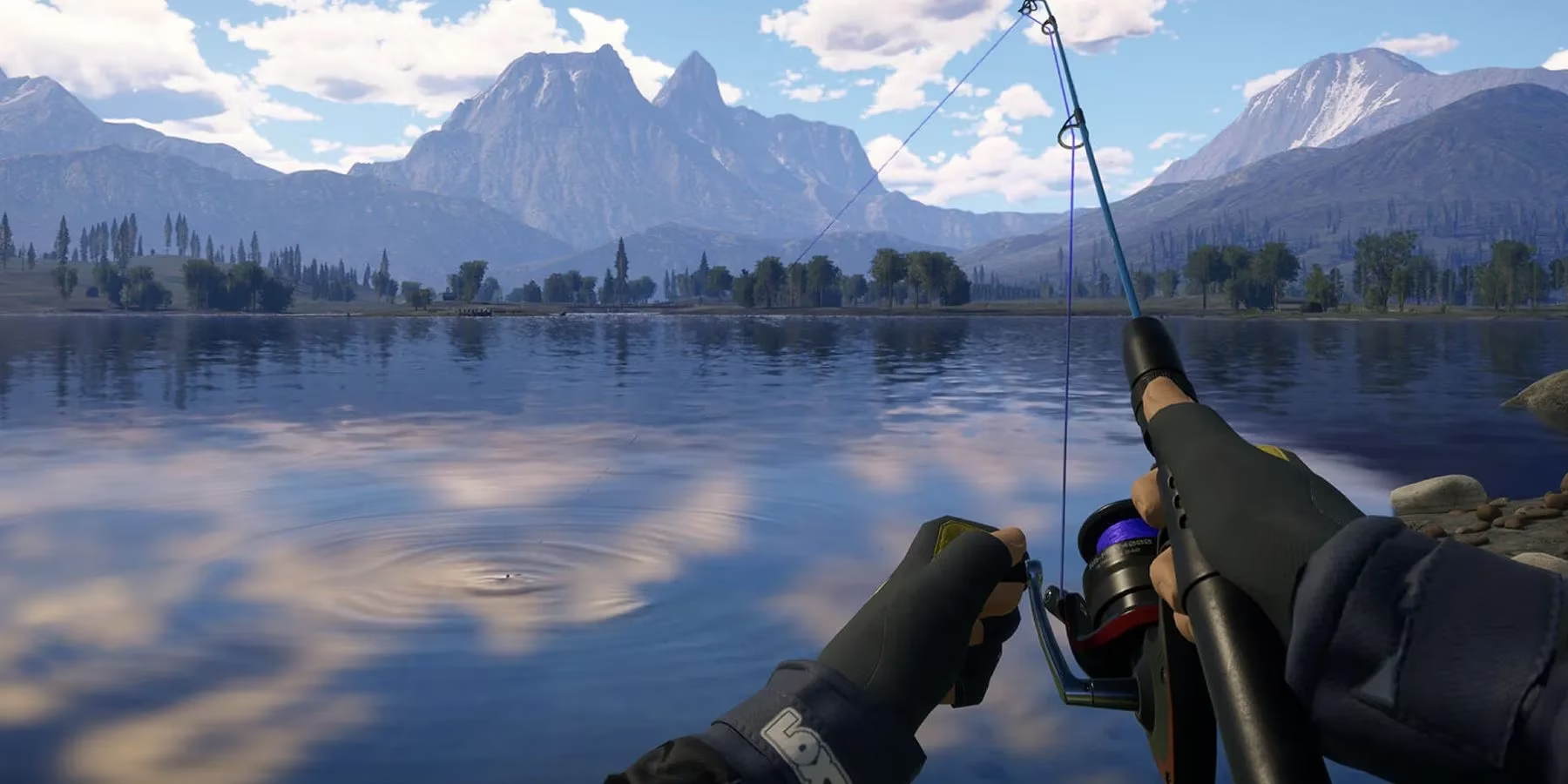
The Essence of the Catch: Why It Works
So, what makes these simulated experiences so compelling to someone like me? It's the meticulous attention to detail that transforms code into calm. The genre succeeds by mastering several key elements:
| Element | Real-World Feeling | In-Game Example |
|---|---|---|
| Patience & Rhythm | The meditative wait for a bite. | The slow drift of a bobber in Fishing Planet. |
| Skill & Finesse | The precise flick of the wrist during a cast. | Mastering the casting minigame in Red Dead Redemption 2. |
| Discovery & Wonder | Finding a new, perfect fishing hole. | Exploring the uncharted bays in Call of the Wild: The Angler. |
| Tension & Reward | The fight to reel in a big catch. | The controller strain during a tournament in Fishing Sim World. |
These games are digital alchemy, turning simple inputs into complex emotions. The wait for a bite becomes a lesson in mindfulness, a quiet space in a noisy digital world. The fight with a fish is a delicate dance of tension and release, a struggle that feels as strategic as any boss battle. Reeling in a legendary catch provides a surge of triumph that is both primal and profoundly satisfying.
In 2026, these experiences are more immersive than ever. Haptic feedback in controllers simulates the distinct struggle of different fish species—a catfish fights with a slow, powerful drag, while a bass delivers sharp, aggressive tugs. VR integration, though still developing, allows me to literally look over the edge of my virtual boat into the depths below. The line between game and hobby continues to blur, offering a portal to tranquility that is just a button press away. For me, these worlds are more than games; they are a meticulously crafted digital retreat, a series of serene moments suspended in code, waiting for the next cast.
Data referenced from GamesIndustry.biz helps frame why fishing sims have grown from niche curiosities into robust, service-driven ecosystems: steady engagement models, frequent content drops, and community-led competition make titles like Fishing Planet and tournament-focused sims feel less like one-off releases and more like evolving platforms, where new species, venues, and gear refresh the core loop without sacrificing the slow-burn tranquility that defines the genre.
Comments