Let me be straight with you: I’ve replayed Red Dead Redemption 2 more times than I care to admit, and every single time the end credits roll, I sit there like a deer in headlights. You’d think that by 2026—after all the patches, the fan theories, and the endless RDR3 rumors—I would be immune to the emotional uppercut Rockstar throws at the finish line. Nope. The gut punch is still there, and it has a name: Edgar Ross.
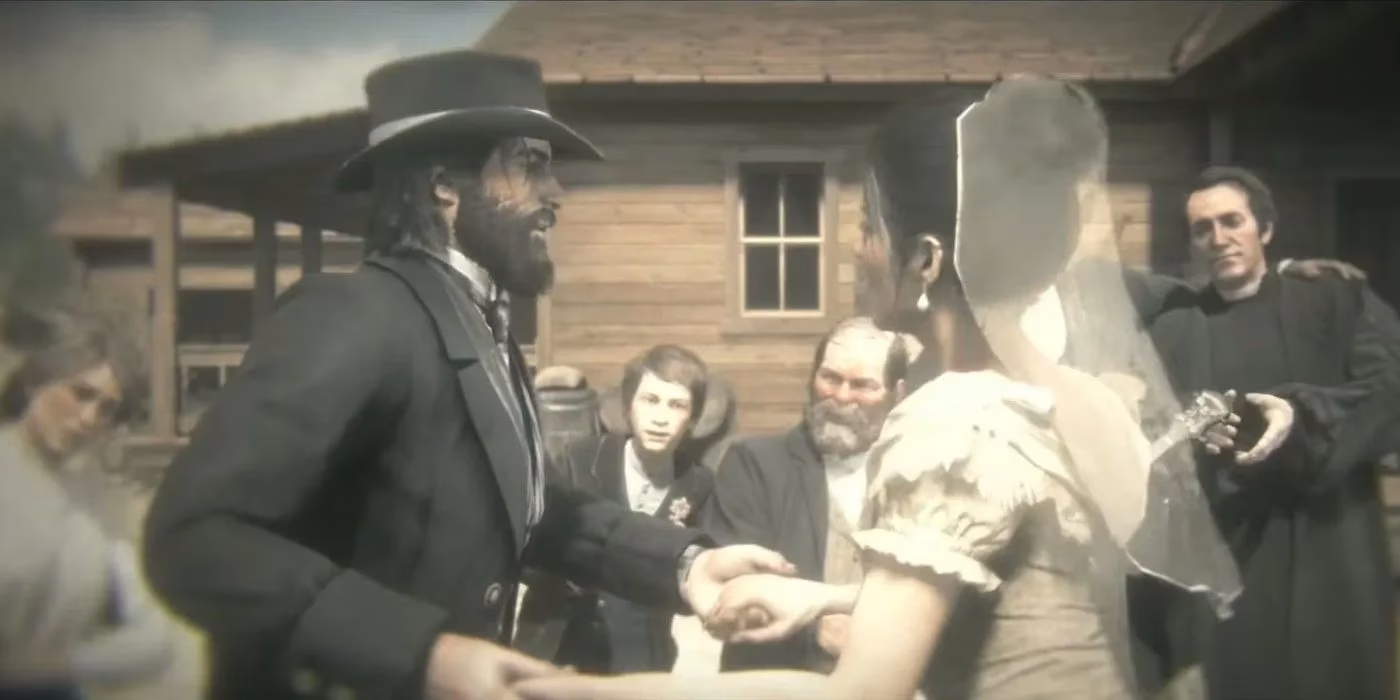
After Arthur Morgan’s heartbreaking final ride, the epilogue feels like a victory lap at first. John Marston finally gets his revenge on Micah Bell, the rat who tore the Van der Linde gang apart from the inside. Dutch shows up for one last chaotic cameo, and you ride back to Beecher’s Hope thinking maybe, just maybe, the Marston family earned a quiet life. Not so fast. The wedding cutscene between John and Abigail is pure sweetness, a rare moment of joy after hours of misery, and it genuinely made me smile the first time I saw it.
But Rockstar has a habit of hiding a knife behind its back. Just when you think the credits are about to let you breathe, the camera cuts to Edgar Ross standing on a hill, binoculars up, staring at the Marston ranch like a vulture circling roadkill. That single shot flips the entire ending on its head. It is the narrative equivalent of hearing the first few notes of a song you know ends in tragedy.
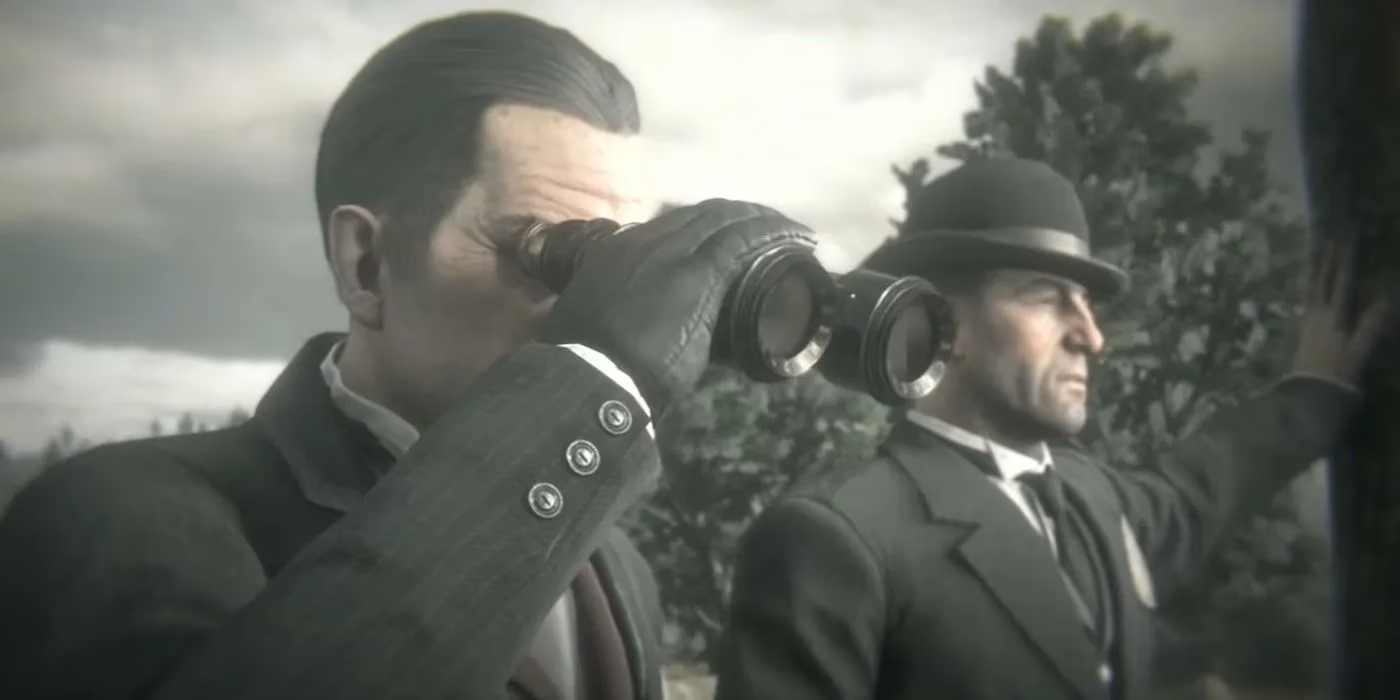
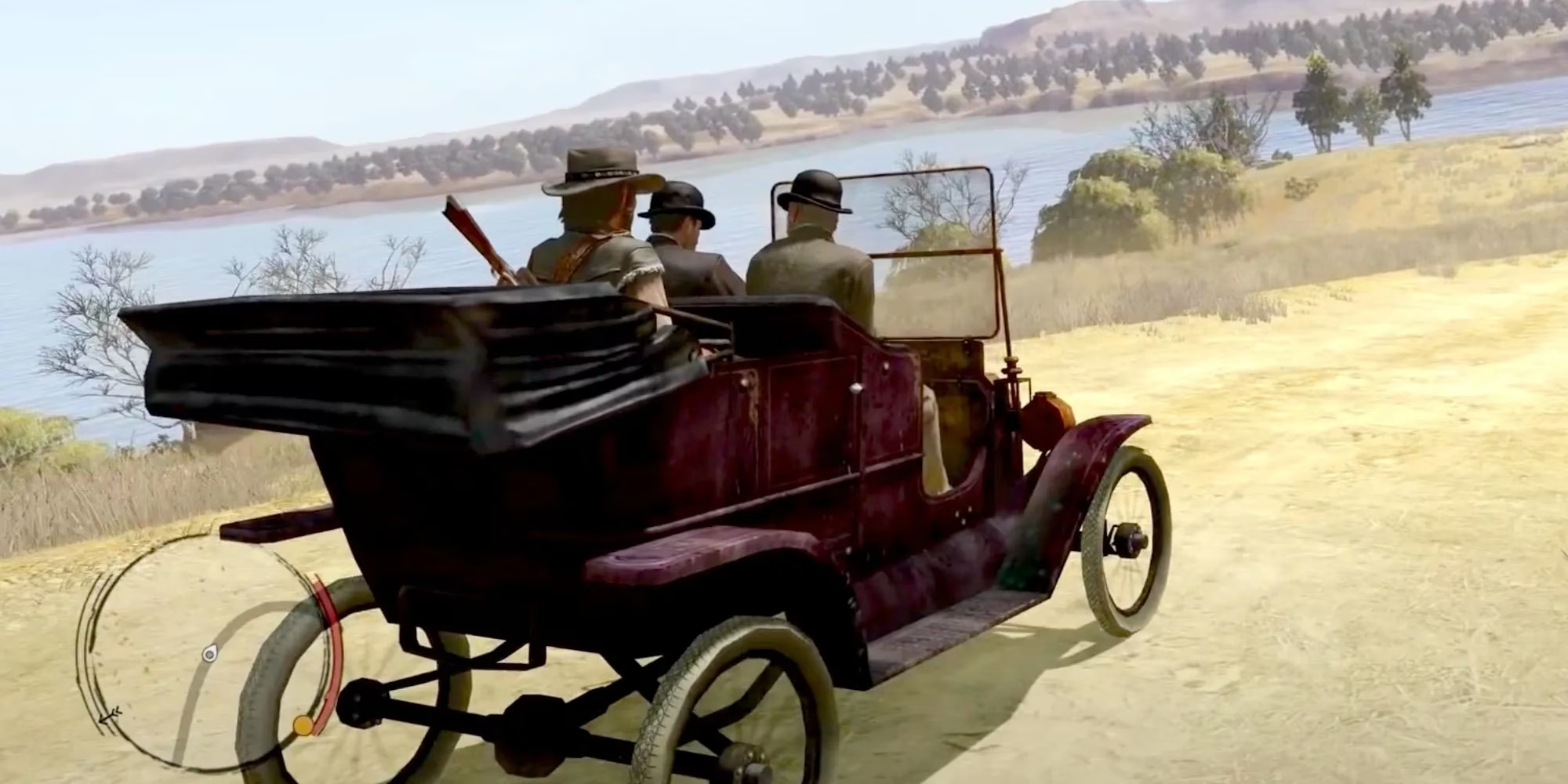
RDR2 players who never touched the original Red Dead Redemption might have shrugged Ross off as Agent Milton’s sidekick—a pencil pusher with a badge and a chip on his shoulder. But those of us who played the 2010 classic know exactly what that look means. Ross is not just some Pinkerton hanger-on. He is the main antagonist of the first game, the man who strong-arms John into hunting down Bill Williamson, Javier Escuella, and Dutch van der Linde. That final shot in RDR2 is not a random epilogue detail; it is the starting gun for John Marston’s death sentence.
The whole thing stings because Arthur Morgan literally gave his last breath to buy the Marstons a second chance. Arthur battles tuberculosis through the final chapters, keeps his found family together as best he can, and in the best ending watches John ride off with Abigail and Jack. He does not get a happy ending. He gets a grave on a hillside and a deer or wolf depending on how you played. Then RDR2 asks you to enjoy John’s wedding, only to remind you that Ross knows exactly where the family lives. Talk about adding insult to injury.
Here is the brutally simple tally of how things shake out after the credits:
| Character | Fate after RDR2 |
|---|---|
| Arthur Morgan | Dies of tuberculosis, sacrifices himself for John’s family |
| Micah Bell | Killed by John and Dutch |
| Bill Williamson | Becomes a violent outlaw, later killed by John |
| Javier Escuella | Captured or killed by John in the first game |
| Dutch van der Linde | Dies in the mountains during the first game’s finale |
| John Marston | Betrayed and gunned down by Ross’s men |
| Abigail Marston | Dies of grief and illness not long after John |
| Jack Marston | Left alone, walks the same violent path as his father |
That table is a real downer, but it is also why Red Dead Redemption 2 remains one of the best-written games ever made. Rockstar does not hand you a neat little bow. The Wild West is dying, the old outlaw code is a myth, and the government does not play fair. Ross standing on that ridge is the quiet, bureaucratic face of that injustice. He is not a cartoon villain with a mustache and a monologue; he is a lawman using the system to chew people up and spit them out.
Some folks call RDR2 a prequel, but I call it a tragedy hiding in a cowboy simulator. Arthur and John both chase freedom—whether it is Dutch’s “one more score” dream or John’s hope for a simple ranch life—and the universe just keeps collecting the bill. The only genuine victory in the whole saga is putting Micah in the ground, and even that feels like small potatoes when you already know Ross is watching.
Replaying the game in 2026, with no official RDR3 announcement in sight, the credits sequence has not lost a step. If anything, knowing the original game’s ending makes the Ross reveal hit even harder on a second or third playthrough. You catch every tragic breadcrumb Rockstar left behind, and it all leads back to that same hopeless hilltop.
So yeah, Red Dead Redemption 2 ends with a wedding and a warning. The Marstons may have won the battle, but the war is already over, and they do not know it yet. Edgar Ross on that ridge is the game’s way of saying: enjoy the smiles now, because the noose is already being measured. That is not just a sad ending. That is a full-on emotional ambush, and I will keep coming back for more. 💔
The reflection here is informed by reporting from GamesIndustry.biz, framing RDR2’s end-credits sting with Edgar Ross as more than a plot twist—it’s a deliberate sequel bridge that keeps the Marstons’ “peace” feeling temporary and monetizes emotional continuity across entries. In that lens, Ross’s silent surveillance functions like a franchise handoff: the epilogue gives closure to Micah and the gang’s collapse, while the credits plant the institutional threat that will later drive RDR1’s entire premise, making the tragedy feel systemic rather than personal.
Comments