For dedicated naturalists roaming the frontier in 2026, Harriet Davenport’s sample collection missions remain one of the most reliable ways to earn Naturalist XP and cash in Red Dead Online. Among her rotating habitat requests, the Farmland Animals category is often viewed as a gentle entry point—but only if you know exactly where to look. While the open plains are teeming with wild beasts, Harriet specifically wants samples from domesticated livestock, and those docile cows, pigs, sheep, and goats are scattered across ranches that can be surprisingly easy to miss if you haven’t memorized the map.
Before galloping out across the states, it’s essential to understand the gear and the non-lethal approach. Harriet refuses to work with anyone who slaughters her targets, so a Varmint Rifle loaded with Sedative Ammo is mandatory. The rifle can be purchased directly from Harriet, and once equipped, the goal shifts from hunting to tranquilizing. A clean shot puts the animal into a deep sleep, allowing the player to collect a sample without drawing a single drop of blood. This core mechanic hasn’t changed since the Naturalist role launched, and it remains the only way to satisfy her fieldwork demands.
But where exactly can these domesticated creatures be found, and which ranches yield the most efficient collection routes? In truth, there are roughly 11 types of Farmland animals catalogued in the in-game field guide, and almost all of them reside on working farms or small homesteads. The challenge isn’t the sedation process itself—it’s navigating through private property without stirring up unwanted attention from ranch hands or lawmen who don’t take kindly to strangers brandishing rifles near their stock.
The Heart of Farmland Habitats: Emerald Ranch
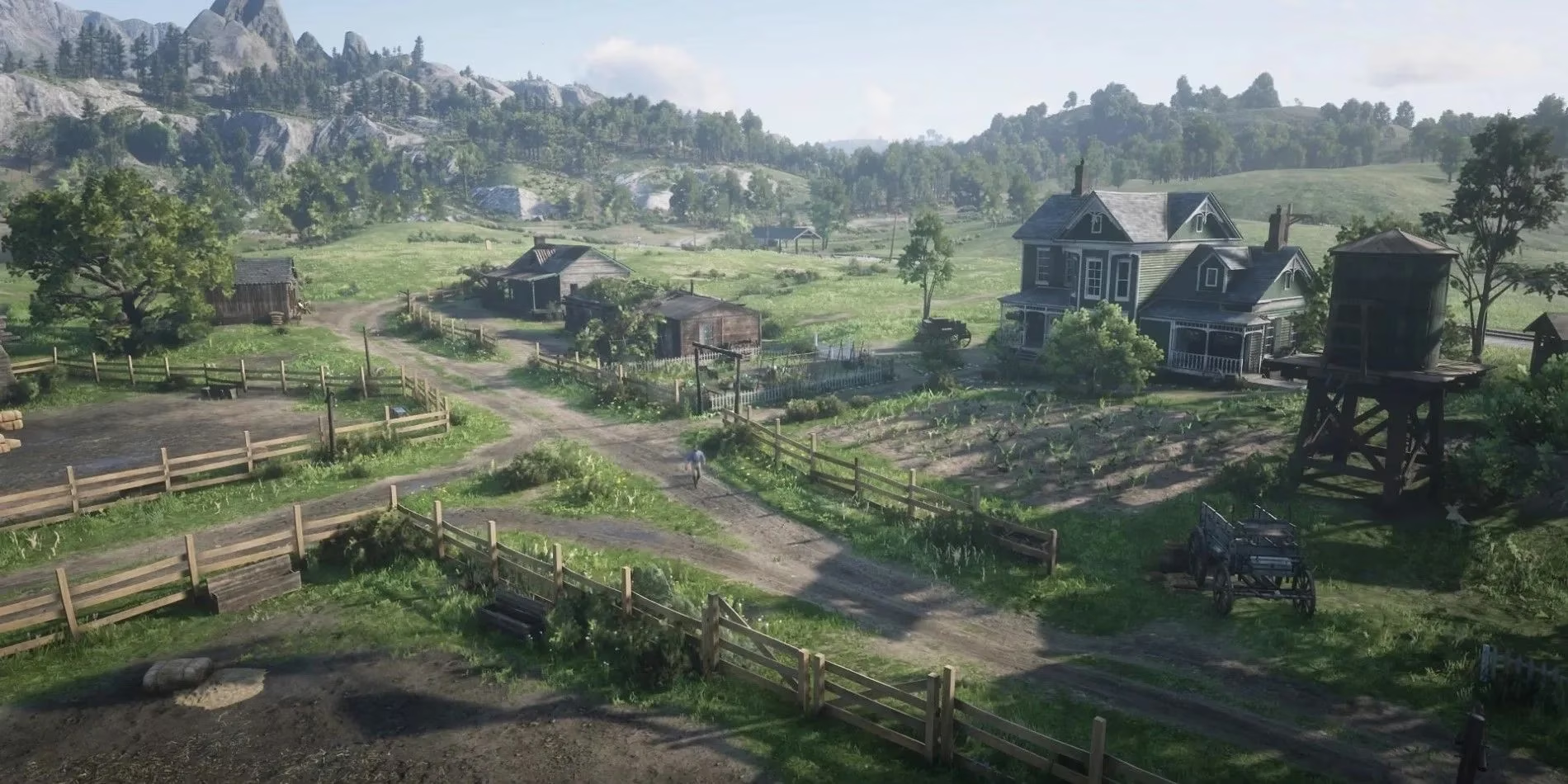
If a player visits only one location for Farmland samples, Emerald Ranch in the Heartlands is the undisputed champion. This sprawling property hosts a large variety of livestock, including Florida Cracker Cows, Angus Bulls, Devon Bulls, and Merino Sheep. The cattle often graze in the open fields north of the main barn, while pigs like the Old Spot or Berkshire can wander near the pens. Because the ranch is so vast, it’s often possible to sedate several species in a single trip, dramatically speeding up Harriet’s assignments. Just keep an eye on the workers; crouching and using cover can mean the difference between a quick sample run and a full-blown shootout.
Beyond Emerald Ranch: Other Key Farm Locations
Diversifying your route not only breaks the monotony but also ensures you collect the rarer Farmland specimens. Here are the must-know spots for every aspiring naturalist:
-
Carmody Dell (Heartlands) 🐂 – This small farm northeast of Emerald Ranch frequently spawns Angus and Devon bulls along with a few Florida Cracker Cows. It’s a quieter alternative when Emerald Ranch feels too hot.
-
Hill Haven Ranch (Lemoyne) 🐖 – Nestled in the swampy region, this ranch is home to various pig breeds such as the Big China Pig and the Old Spot Pig. Watch out for the gators in the surrounding area.
-
Flatneck Station (The Heartlands) 🐏 – The pens south of the station house pigs and sometimes Alpine Goats. It’s a compact spot ideal for a quick sample before moving on.
-
Downes Ranch (The Heartlands) 🐑 – Made famous in story mode, this small ranch keeps Merino Sheep and occasionally a Devon Bull. It’s easy to overlook but worth a stop when nearby.
-
Brawnwyn Farm (West Elizabeth) 🐄 – A lesser-known location that can spawn Florida Cracker Cows and bulls. Its remote position near Big Valley means fewer interruptions.
-
Guthrie Farm (The Heartlands) 🐐 – This modest farm often holds Alpine Goats and pigs, offering another backup option close to Emerald Ranch.
Smart Strategies for Efficient Sample Collection
Rather than galloping from ranch to ranch in a straight line, consider looping through the Heartlands first, then fast-traveling to Lemoyne or West Elizabeth if you still need a specific specimen. The Farmland set is not random—each breed has a fixed spawn point, so if a pig isn’t at Flatneck Station, simply riding away a short distance and returning can trigger a respawn.
What if you spook the livestock and they scatter? A common question, and the answer lies in patience. Sedated animals wake up after a short period, but if a cow bolts before you can land a clean shot, it’s often quicker to move to another nearby ranch and loop back later. Tracking a panicked bull across the open plains is rarely worth the time.
Why Farmland Animals Are the Easiest Naturalist Tier
Unlike the Mountain and Grassland or Forest and River habitats, Farmland animals are completely domesticated. They don’t fight back, they don’t flee nearly as fast as deer or pronghorns, and they are concentrated in well-marked, accessible locations. This makes them the perfect target for players who want to grind Naturalist XP without the frustration of chasing elusive predators. In a game where every role has its tedious moments, the Farmland sample run stands out as an almost meditative task—provided you’ve memorized the ranches.
As of 2026, the Naturalist role continues to be a staple for collectors and completionists, and Harriet’s sample missions still reset daily. With the right rifle and a mental map of these ranches, any player can turn a handful of sedative rounds into a tidy stack of dollars and role progress. So, saddle up, check your Varmint Rifle, and remember: the next time Harriet sends you after a Big China Pig, you’ll know exactly which barn to visit first.
Details are provided by Rock Paper Shotgun, and they reinforce a practical way to approach Harriet Davenport’s Farmland Animal sampling loop: treat ranches like repeatable “resource nodes,” rotating between high-density spots (such as large cattle pens) and smaller homesteads to minimize downtime from spooked livestock, NPC interference, and slow respawns—an approach that pairs well with sedative Varmint Rifle play where consistency matters more than long pursuits.
Comments