As I reflect on the legacy of Red Dead Redemption 2 in 2026, nearly eight years after its initial release, its narrative brilliance continues to resonate. The game's sprawling, living world and its deliberate, character-driven storytelling remain a benchmark in the industry. While the visual spectacle and immersive gameplay were immediately apparent, it's the intricate web of character parallels and foreshadowing that has cemented its status as a modern classic. The journey of the Van der Linde gang, particularly the contrasting arcs of Arthur Morgan and Micah Bell, is a masterclass in thematic storytelling, where even subtle details like a persistent cough carry profound narrative weight.
The Foundation of a Saga: A Prequel's Purpose
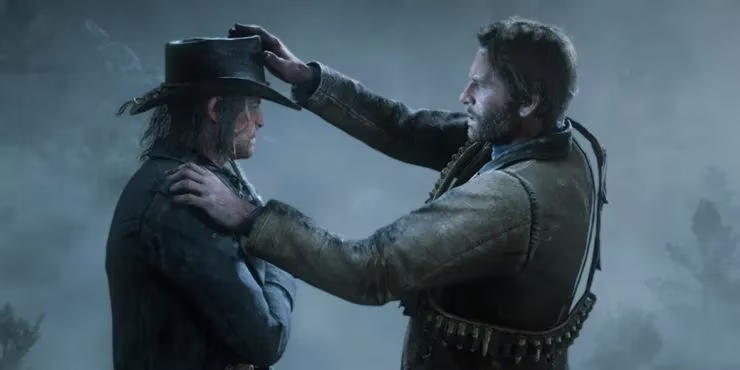
Red Dead Redemption 2's genius lies in its role as a prequel. It doesn't just tell a separate story; it meticulously lays the groundwork for the events of the 2010 original, creating a seamless and heartbreaking continuity. We witness the origins of John Marston's defining scars, both physical and emotional. We see the first cracks in Dutch van der Linde's charismatic facade, watching his slow, inevitable descent into the villain John must later hunt. Perhaps most poignantly, we learn the history behind simple objects, like Arthur Morgan's hat, transforming them from mere apparel into powerful symbols of legacy and memory. This interweaving of narratives makes the two Rockstar titles feel like two halves of a single, epic tragedy.
Foreshadowing in Plain Sight: The Subtle Art of Narrative Consistency
The game is littered with brilliant moments of foreshadowing that only gain their full impact with knowledge of the series' timeline. Early on, players might casually explore a lonely cabin in the mountains, unaware they are standing in the very place where John Marston's story will ultimately conclude. In the homestead of Beecher's Hope, Uncle can be seen lounging in the exact spot where, years later, he will meet his end. These are not coincidences but deliberate narrative stitches, binding the prequel's world to the future we already know. This attention to detail creates a profound sense of destiny and melancholy, knowing the fates that await these characters we grow to care for.
A Cough in the Camp: Micah Bell as the Narrative Canary
Among the most ingenious and subtle uses of foreshadowing is the health of Micah Bell. From his first introduction, Micah is portrayed as thoroughly unsavory—rude, obnoxious, and antagonistic. Part of this unpleasant aura is his persistent respiratory issue. He is frequently heard snorting or battling a hacking, wet cough. On a first playthrough, this seems like just another layer to his vile nature, a physical manifestation of his corrupt character. There is no sympathy to be had for Micah's discomfort; it simply makes him more grating to be around.
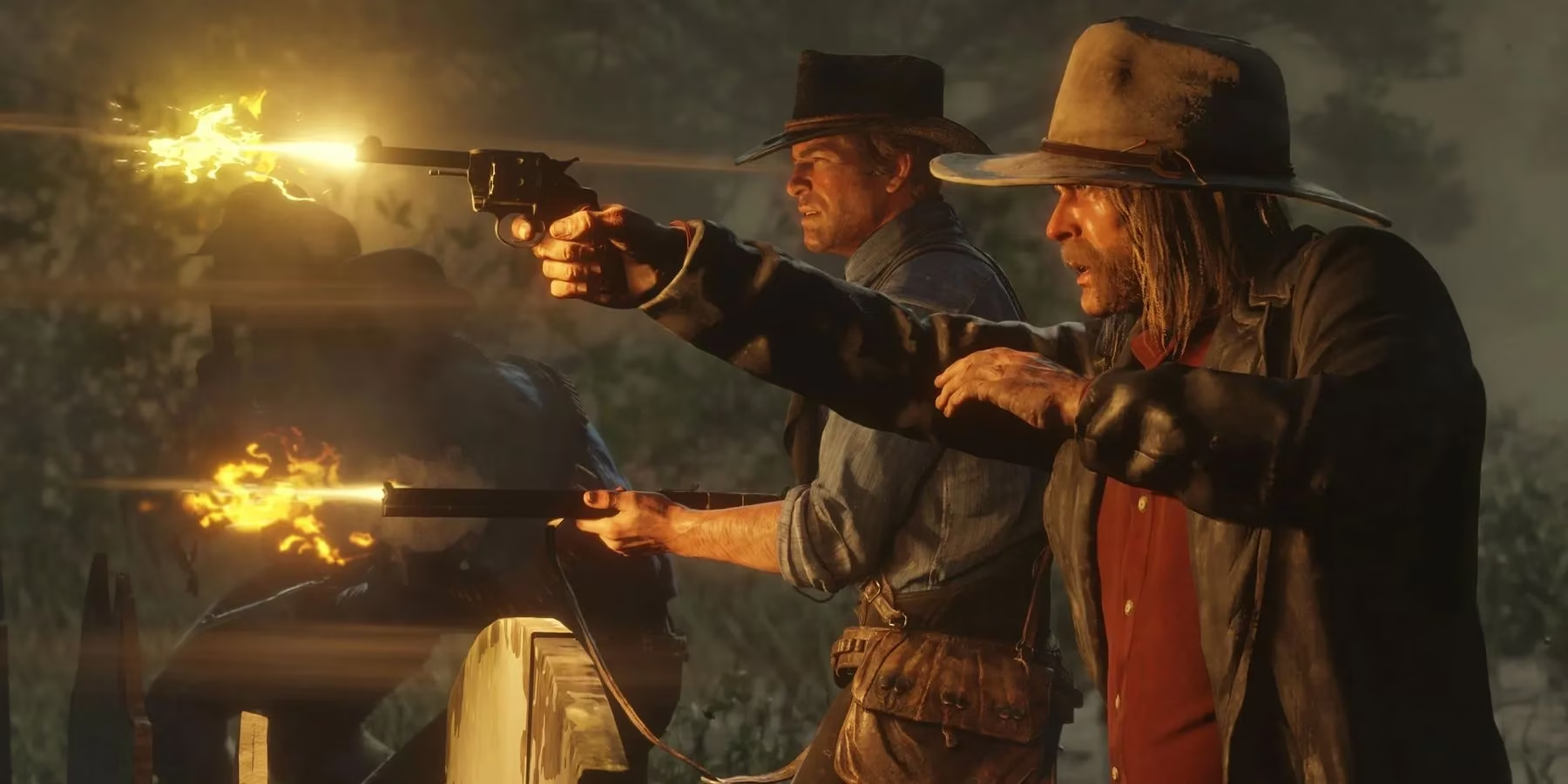
However, this trait serves a much deeper purpose. Micah's cough is a narrative "canary in the coal mine," a grim precursor to the tuberculosis that will eventually plague Arthur Morgan. When Arthur contracts TB in the game's later chapters, his own respiratory struggles reframe Micah's condition from a character quirk into a piece of devastating foreshadowing. The game establishes the symptom—the cough—with its villain long before it afflicts its hero, making Arthur's diagnosis feel tragically inevitable within the world's logic.
Contrasting Paths: Illness as a Mirror for Character
This is where the game's storytelling becomes exceptionally nuanced. Arthur Morgan and Micah Bell are diametric opposites in almost every conceivable way:
| Character Trait | Arthur Morgan | Micah Bell |
|---|---|---|
| Loyalty | Unwavering, to a fault | Self-serving, treacherous |
| Morality | Seeks redemption, protects the weak | Ruthlessly opportunistic, preys on the weak |
| Demeanor | Generally pleasant, thoughtful | Sly, vindictive, belittling |
| Visual Design | Lighter hair, practical, worn clothing | Dark hair, flashy, aggressive attire |
Yet, they share this common thread of deteriorating health. The implementation of this shared struggle, however, casts them in completely contrasting lights:
-
For Micah, his illness is an extension of his repulsiveness. It complements his unsavory nature, making his presence even more uncomfortable. Players do not worry about his outcome; his sickness is just another unappealing facet of a man they love to hate.
-
For Arthur, his illness is a brutal, unfair obstacle on his path of redemption. As he strives to become a better man and secure a future for his loved ones, his body fails him. This isn't a complimenting trait; it feels like a "glitch in the system" of a typical heroic narrative. We root for Arthur to overcome it, making his struggle profoundly emotional.
The Heart of the Tragedy: Caring for the Outcome
The core emotional difference lies in where the player's concern is directed. We care deeply about Arthur's fate. His cough is a source of dread and sadness, a ticking clock on his chance at salvation. Micah's identical symptom evokes no such empathy. This dichotomy masterfully uses a identical mechanic—a health ailment—to highlight the vast gulf between a character on a redemptive journey and one entrenched in villainy. It underscores that in storytelling, context and character are everything. A cough is just a cough, unless it is hacking from the lungs of a man you have ridden with for dozens of hours, a man desperately trying to do some good with the time he has left.
In 2026, Red Dead Redemption 2's enduring power is not just in its vast landscapes or cinematic shootouts, but in these deeply human, carefully woven details. The parallel illnesses of Arthur and Micah stand as a testament to the game's narrative sophistication, proving that the most powerful foreshadowing isn't always in dramatic prophecies, but sometimes in the quiet, ugly cough of a rat in the camp, whispering of tragedies to come.
Comments