Set against the breathtaking yet unforgiving backdrop of 1899 America, Red Dead Redemption 2 immerses players in the twilight of the Wild West, a world on the precipice of being forever changed by industrialization. The narrative centers on Arthur Morgan, a conflicted outlaw grappling with his loyalty to the crumbling Van der Linde gang and a profound, personal reckoning with his own mortality. As the world modernizes around him, Arthur's journey becomes a poignant exploration of legacy, loyalty, and the elusive quest for redemption in a lawless land.
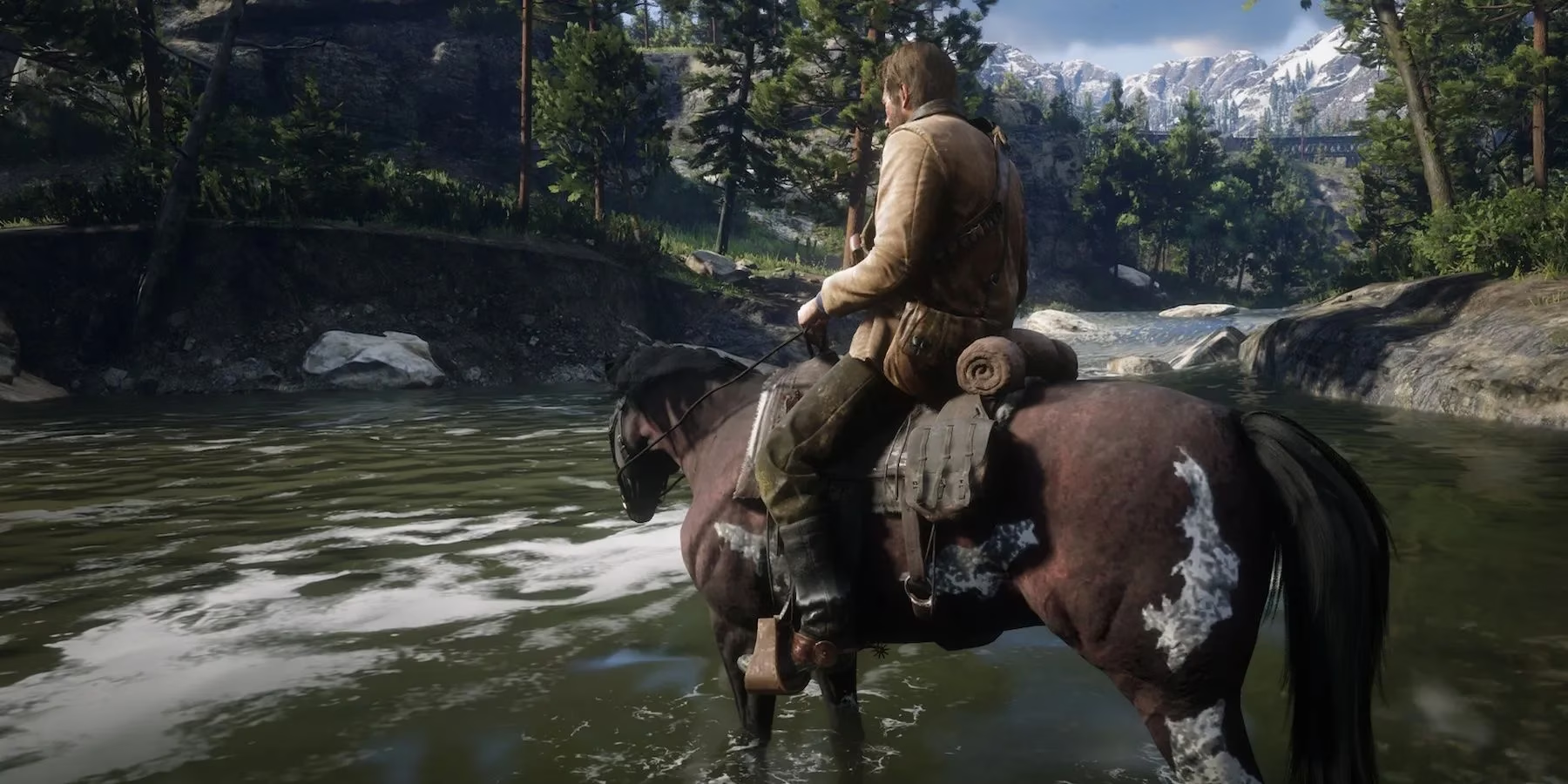
🔍 The Mechanics of Morality: A Flawed Scale
At its core, the game employs a morality system designed to track Arthur's deeds, ostensibly shaping his path and culminating in one of two distinct conclusions. On paper, it's straightforward: commit virtuous acts to earn honor and secure a more hopeful finale, or embrace wickedness, accruing dishonor that leads to a grim demise. However, this ethical compass is fundamentally broken, failing to assign appropriate weight to Arthur's actions and often reducing profound moral choices to trivial gameplay mechanics.
The system's inconsistencies are glaring. While the cold-blooded murder of countless humans barely registers, harming certain "special" animals like horses or dogs incurs significant dishonor. Conversely, boosting one's honor can be absurdly simple and immersion-breaking. A player can pivot from notorious villain to paragon of virtue merely by spending an afternoon in Saint Denis, robotically greeting every passerby. This transforms a deeply philosophical concept—personal honor—into a mundane grind, akin to performing mind-numbingly boring camp chores like chopping wood or hauling hay.
⚖️ The Lopsided Incentives: Good vs. Evil Rewards
Unsurprisingly, the game heavily incentivizes players to pursue the high-honor path. The rewards for virtue are tangible and substantial:
-
💰 Financial Perks: Significant discounts at all stores.
-
👔 Exclusive Apparel: Access to unique, stylish outfits.
-
🎬 Narrative Payoff: The emotionally resonant and widely preferred "good" ending for Arthur Morgan.
In contrast, the allure of embracing a devilish persona is underwhelming. The primary benefit for low-honor players is a slightly increased drop rate for consumables like Dead Eye tonics, alcohol, and throwing knives—a paltry reward that hardly justifies forsaking narrative satisfaction and gameplay advantages. This imbalance funnels most players toward a prescribed "good" path, undermining the system's promise of meaningful choice.
✨ Redemption Beyond the Meter: "Show, Don't Tell"
Where Red Dead Redemption 2 truly shines is not in its mechanical morality meter, but in its masterful environmental storytelling and character development. The central theme of redemption is woven into the very fabric of Arthur's journey. Through his journal entries, subtle interactions with gang members, and key narrative moments, players witness his internal struggle firsthand. They see a violent man confronting his past and wrestling with the possibility of atonement in his final days.
This is narrative craftsmanship at its finest—a powerful "show, don't tell" approach that makes a clunky honor system feel redundant. Arthur's potential for change is demonstrated through his actions and reflections, not dictated by a sliding scale. It proves that a tightly written, character-driven story can explore complex ethics far more effectively than any binary gameplay mechanic.
🔮 The Future of the Franchise: Lessons for a Potential Sequel
As of 2026, Rockstar's focus remains on the monumental success and ongoing evolution of Grand Theft Auto VI. The development of Red Dead Redemption 3 remains speculative, but with over 61 million copies sold, the beloved Western franchise is sure to ride again someday. When it does, the studio has a golden opportunity to refine its formula.
The lesson from RDR2 is clear: the next chapter does not need to resurrect the flawed morality system. Instead, Rockstar should double down on its unparalleled strength—crafting immersive, emotionally charged narratives where morality emerges organically from player choices and character relationships, not from a simplistic meter. Imagine a world where your reputation with individual communities, your bonds with companions, and the consequences of your decisions create a dynamic and nuanced ethical landscape, far surpassing the honor/dishonor binary.
Red Dead Redemption 2 stands as a narrative masterpiece, a landmark achievement in video game storytelling. Its so-called morality system, however, remains its most glaring anachronism—a clumsy, game-y mechanic in an otherwise stunningly authentic world. For the future of the series, true redemption lies in leaving it behind.
Comments