I've always been the kind of gamer who sighs when a sequel is announced. I mean, how many times has Hollywood burned us with lazy follow-ups, right? The same dread used to creep into my gaming heart. But somewhere along the way, I realized that video games play by different rules. In this medium, sequels aren’t just cash grabs – they’re often the definitive version of an idea that finally gets the budget, time, and ambition it deserved. And these seven games? They didn’t just improve on their predecessors. They erased my fondness for the originals. Let me walk you through my memories – and maybe you’ll agree that some sequels are simply irreplaceable.
Portal 2 – The Cake Got Bigger and Funnier
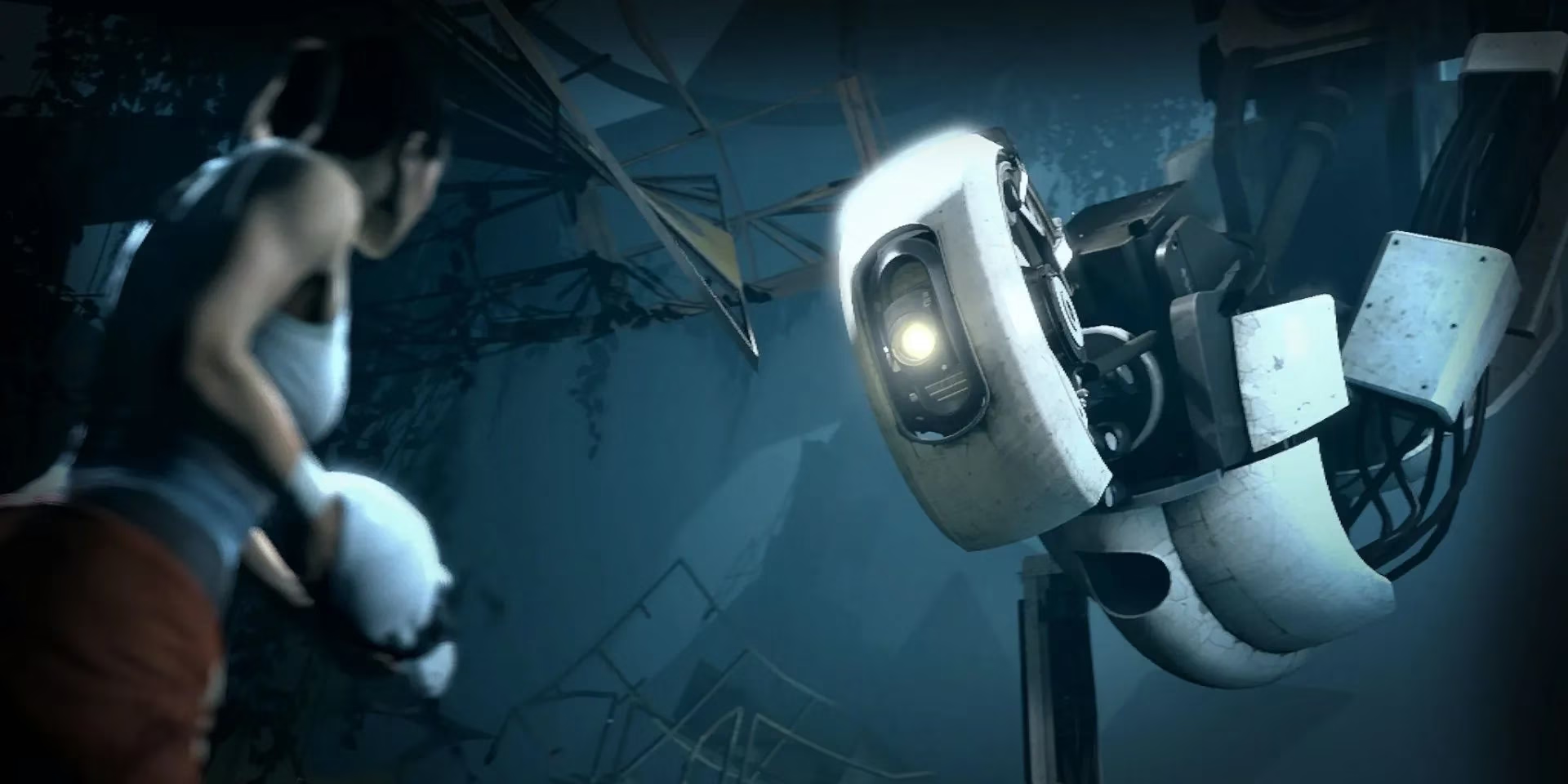
I remember finishing the original Portal in one sitting and thinking, “That was a perfect little puzzle.” It was tight, clever, and oh so short. Fast forward to 2026, and I still boot up Portal 2 at least once a year. Why? Because Valve didn’t just stretch the idea – they injected it with a personality I didn’t know I needed. The first game had GLaDOS and a sterile test chamber vibe. Portal 2 gave me Wheatley’s bumbling charm, Cave Johnson’s unhinged recordings, and the repulsion and propulsion gels. Have you ever bounced across a chasm using orange goo while a British sphere cracks joke? It’s as hilarious as it sounds.
And it’s not just the comedy. The puzzles themselves grew deeper. Light bridges, excursion funnels, and hard-light surfaces make your brain work in ways the original never demanded. I also adored the separate co-op campaign. Trying to coordinate portals with a friend turned a solo genius exercise into a chaotic dance of trust and friendly betrayal. Even by 2026 standards, few puzzle titles match the sheer polish and warmth of this sequel. The original? A brilliant prototype. Portal 2? The finished masterpiece.
Uncharted 2: Among Thieves – From Repetitive Shooter to Blockbuster Epic
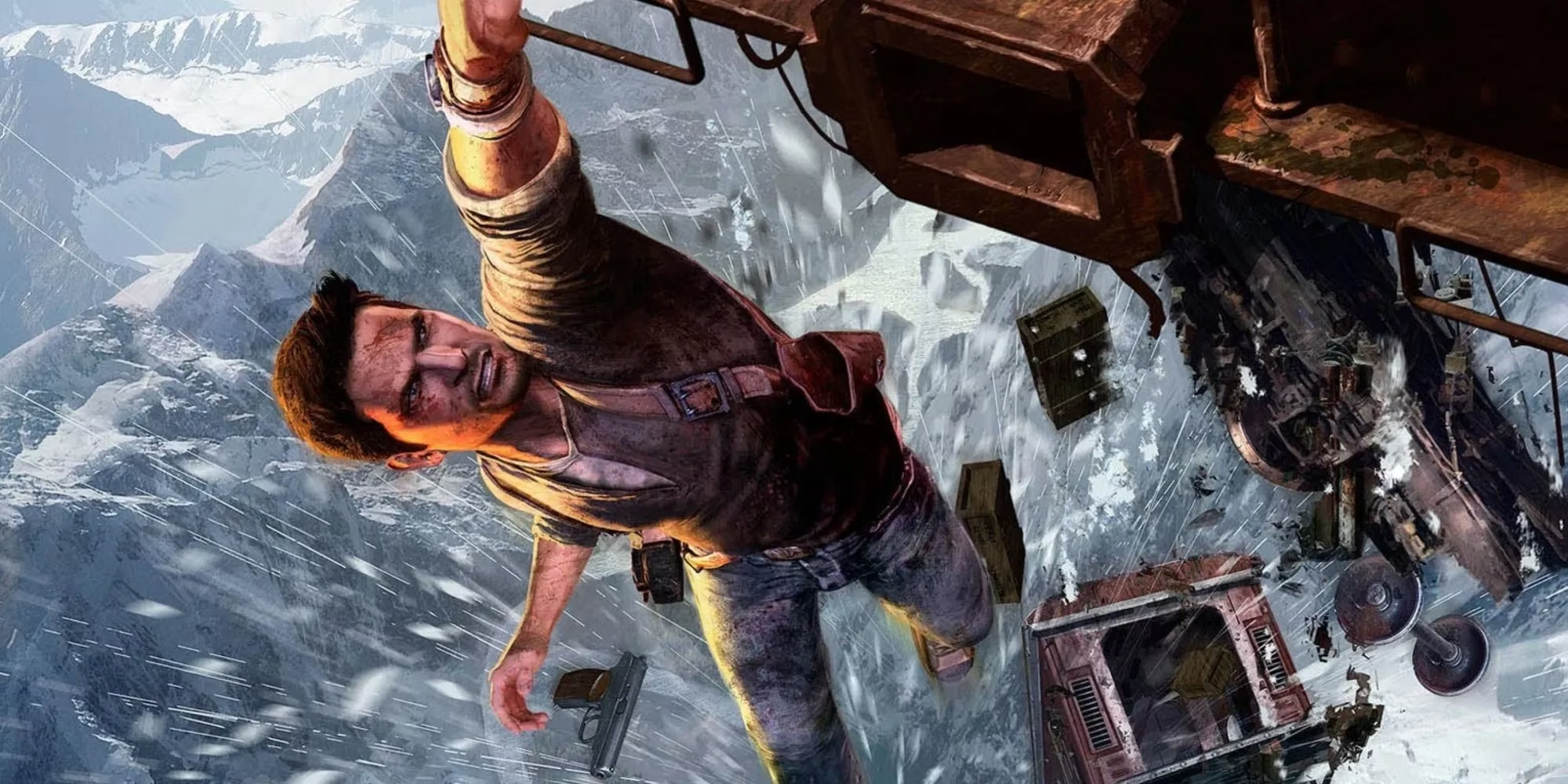
I’ll be honest: Uncharted: Drake’s Fortune left me exhausted. Too many samey shootouts, and that jet ski section still haunts my nightmares. So when Among Thieves arrived, I approached it with cautious optimism. But within the first hour – dangling from a train car over a snowy cliff – I knew something had shifted. Naughty Dog had listened.
The combat, while not revolutionary, felt snappier. More importantly, the missions varied wildly. One moment I’m sneaking through a Turkish museum, the next I’m trapped in a collapsing building. The characters bloomed too. Nate, Elena, and Sully became people I cared about, and the villains – especially Zoran Lazarević – radiated genuine menace. Do you remember the train level? That sequence alone showcases everything a sequel should do: bigger stakes, tighter pacing, and zero frustrating vehicle segments. I still think of Uncharted 2 as the moment the series truly found its soul.
Red Dead Redemption 2 – When a Prequel Outshines Its Own Legacy
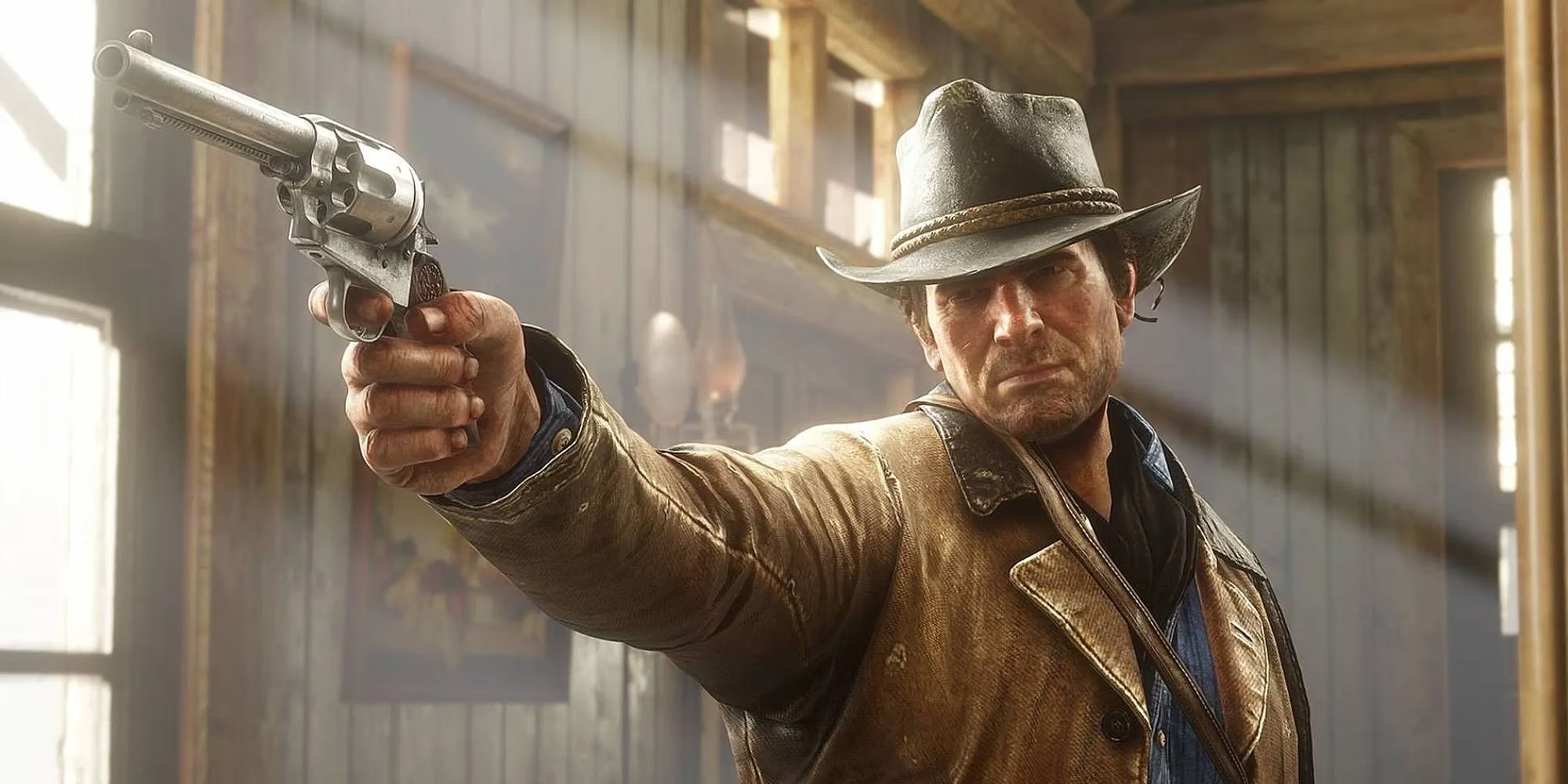
Calling Red Dead Redemption 2 a sequel feels almost unfair, given its prequel story. But in gaming terms, that’s exactly what it is – and what an upgrade! The first Red Dead Redemption was already a masterpiece. John Marston’s tragic journey moved me to tears. So when I first rode into the world as Arthur Morgan, I didn’t expect to be this captivated.
Yet here I am, six years after its release (yes, it’s 2026), still discovering new things. The world breathes. Wildlife interacts with each other, NPCs remember your face, and every saloon hides a secret. The story? Painfully beautiful. Arthur’s internal struggle and the gang’s slow dissolution linger in my mind far longer than John’s revenge quest. And the details! Horse testicles shrink in the cold – did you know that? That absurd attention to immersion makes the original feel like a sketch. Red Dead Redemption 2 didn’t just raise the bar; it hogtied it and threw it off a cliff.
The Witcher 3: Wild Hunt – How a Third Entry Defined a Generation
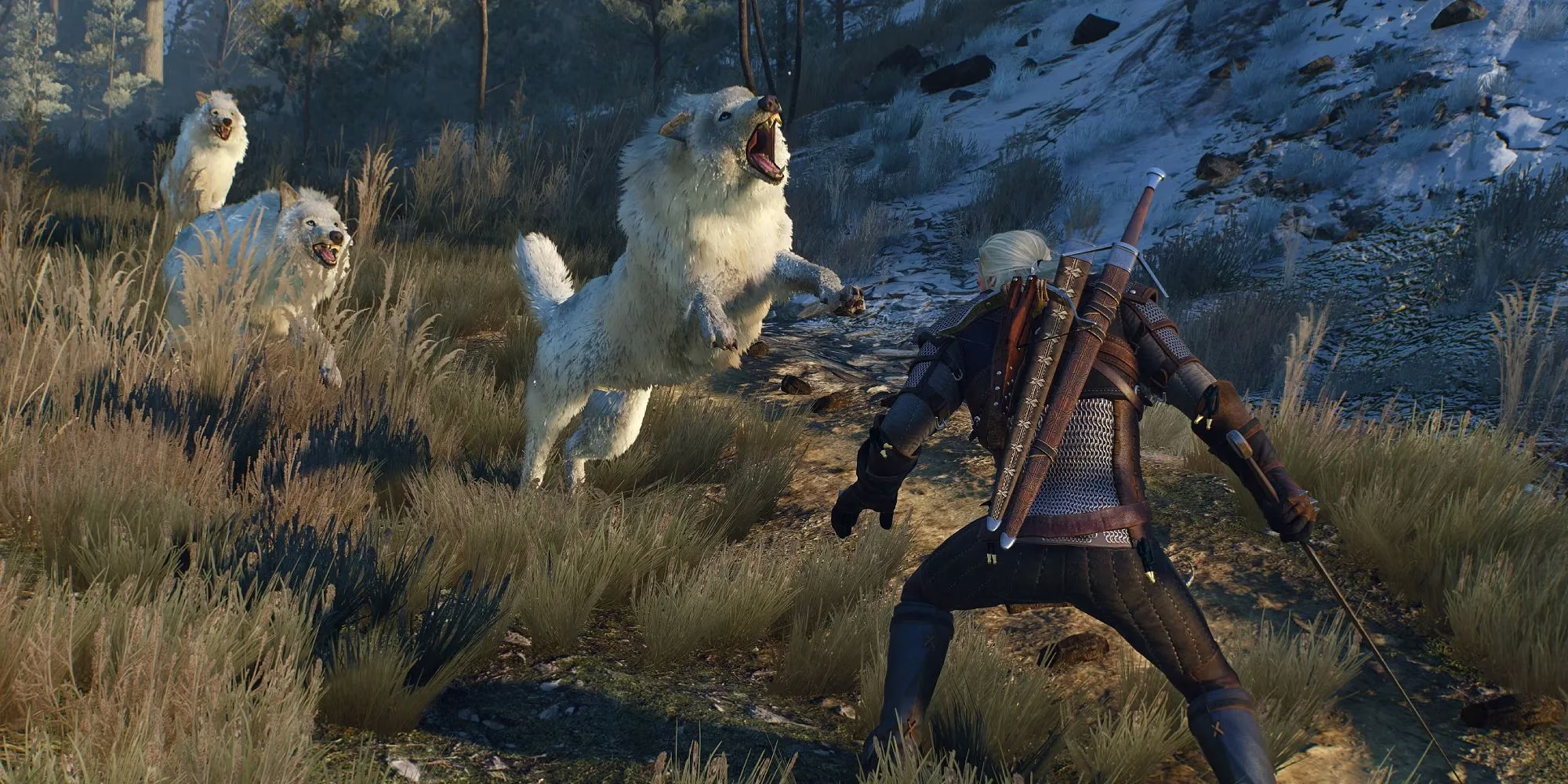
I played the original The Witcher back when it was a clunky, Eurojank curiosity. The Witcher 2 improved drastically, but still felt niche. Then Wild Hunt dropped, and suddenly everyone I knew was humming “Pam pa ram.” This sequel didn’t just improve on its predecessor – it catapulted the series into legendary status.
The open world alone left its older siblings in the dust. Velen, Skellige, Novigrad – each region teems with side quests that rival main storylines from other games. I’ll never forget the Bloody Baron’s questline, a Shakespearean tragedy crammed into an optional detour. Combat finally flowed smoothly, blending swordplay with signs and alchemy in a dance I actually enjoyed. And can we talk about the two expansions? Hearts of Stone and Blood and Wine could stand as full games themselves. By 2026, I’ve replayed The Witcher 3 four times, and each playthrough reveals new consequences. The first two games are mere footnotes now.
Assassin’s Creed 2 – When Fans Spoke, And Ubisoft Listened
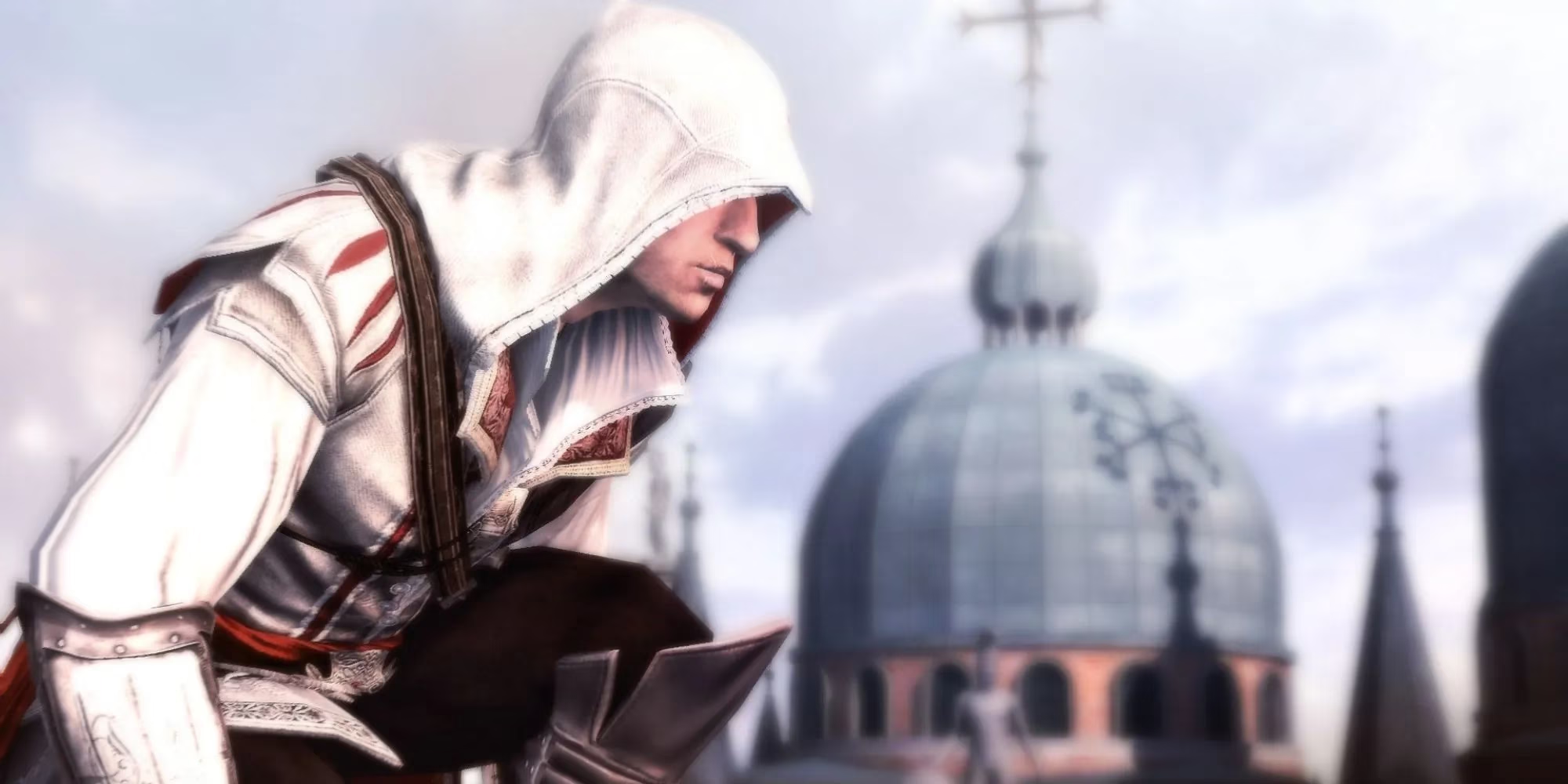
Let’s rewind to 2007. Assassin’s Creed introduced a radical concept but buried it under repetitive investigations and rigid mission structures. I liked Altair, but doing the same eavesdrop-pickpocket-beat-up loop seven times drove me nuts. Then along came Ezio Auditore, and Florence became my playground.
Assassin’s Creed 2 tore up the blueprint. Missions now varied from frantic chases to tomb-raiding puzzles. I could approach targets with creativity rather than a mandated checklist. And Ezio – oh, Ezio. Watching him grow from a carefree noble into a master assassin over decades gave the story an emotional core that Altair never achieved. Combat felt more fluid, stealth actually worked, and the addition of economic systems made me feel like a true Renaissance schemer. Even in 2026, I see its DNA in every open-world sequel that follows. The original game? A proof of concept. AC2? The real beginning.
Half-Life 2 – Physics, Ravenholm, and A Gravity Gun
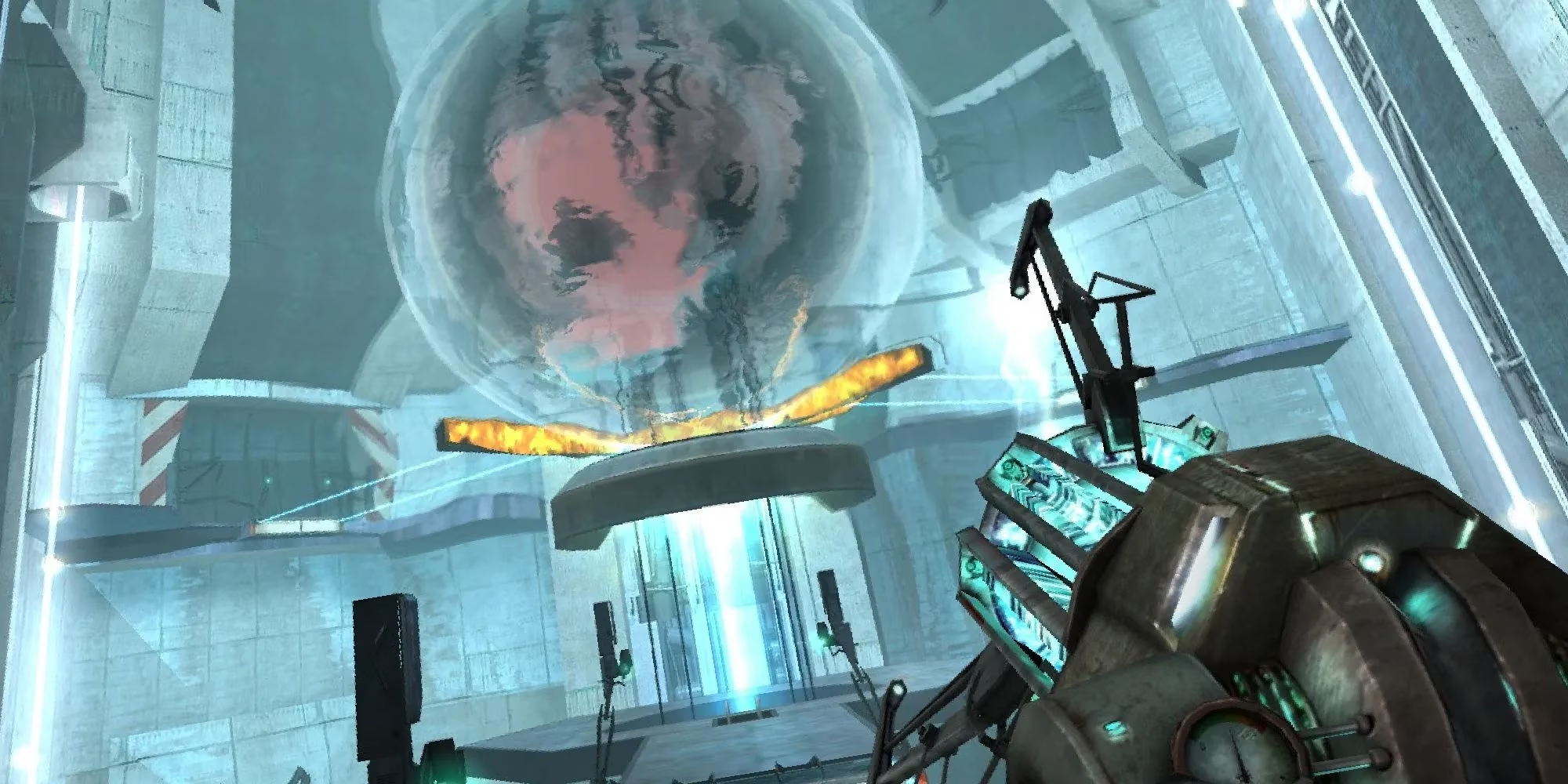
Half-Life was a seismic event when it launched. Atmospheric, seamless storytelling in an FPS? Unheard of. Then Half-Life 2 arrived, and suddenly the original looked almost quaint. What do you do when you’ve already redefined a genre? You add physics so groundbreaking that people still talk about them decades later.
I’ll never forget my first hour in City 17, tossing sawblades at Combine soldiers with the gravity gun. The Source engine made every object a potential weapon or puzzle piece. Ravenholm terrified me, not just because of the fast zombies, but because I could manipulate the environment to survive. And unlike the original’s frustrating Xen chapters, Half-Life 2 kept me grounded in haunting, Eastern European urban decay. The characters – Alyx, Eli, the G-Man – gained real depth. By 2026, the modding community still keeps this game alive, which tells you everything about its lasting superiority.
Mass Effect 2 – Fixing The Combat And Deepening The Bonds
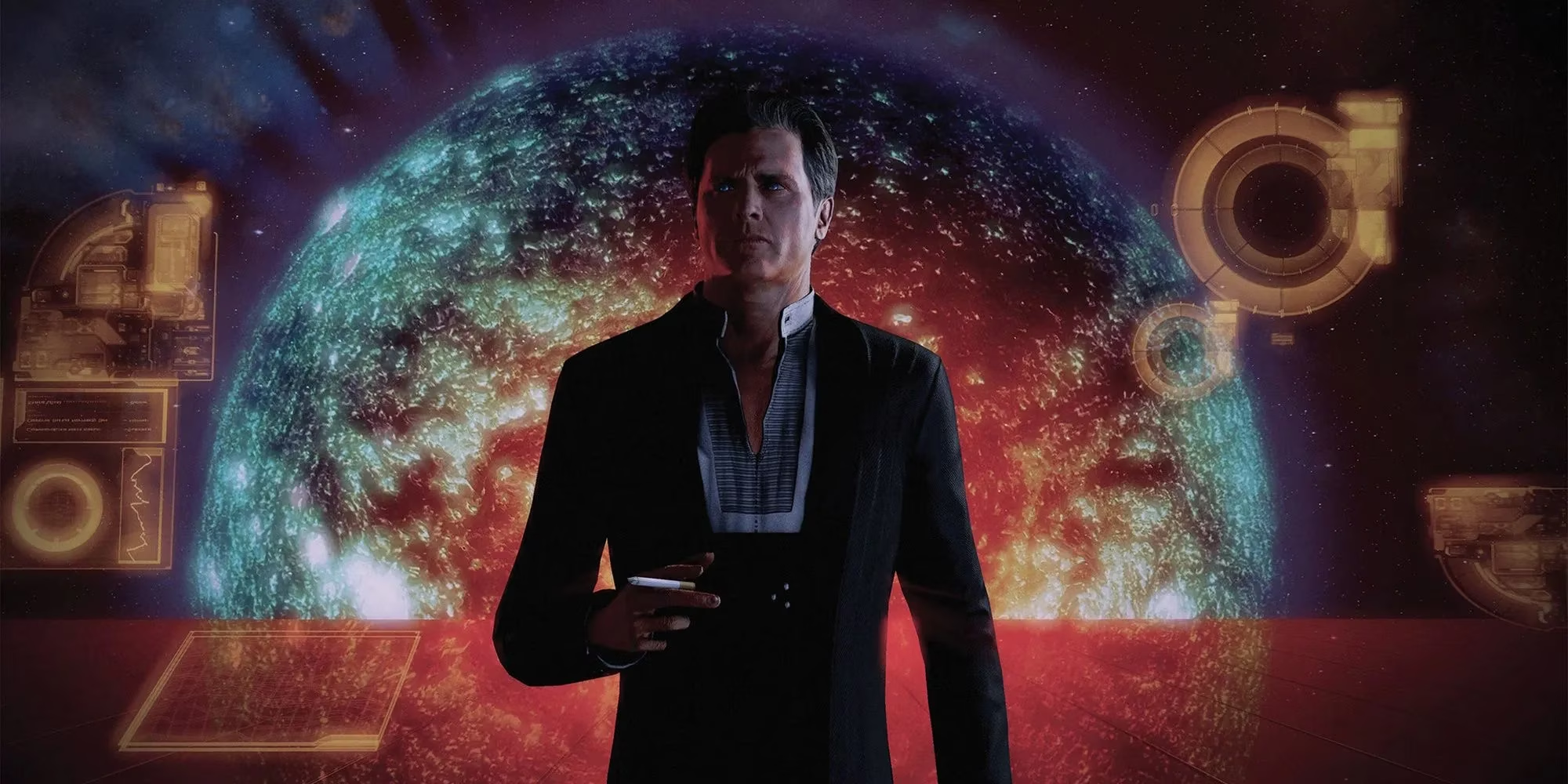
I adored the first Mass Effect for its story and world-building. But let’s be real: the Mako exploration was a chore, and the combat felt like a clunky afterthought. I replayed it recently (yes, even with Legendary Edition). So when Mass Effect 2 dropped me into its gritty, suicide-mission structure, I almost wept with relief.
The cover-based shooting became genuinely enjoyable. Biotics felt weighty, guns had oomph, and I didn’t dread side missions anymore – because the loyalty missions were brilliant character studies. I got to know Garrus, Tali, and Miranda on such an intimate level that saying goodbye before the final mission genuinely hurt. The Illusive Man became a nuanced antagonist, and the semi-open structure gave me agency without aimlessness. Do you remember the suicide mission? The tension of assigning the right specialists to each task? That single sequence outdoes anything the original game offered. By 2026, whenever someone asks me which Mass Effect to start with, I point them to this one. It’s the benchmark for how sequels should overhaul flawed foundations.
So here I am, in 2026, still replaying these sequels while many originals gather digital dust. They taught me that a sequel shouldn’t just be “more of the same” – it should be the version the developers dreamed of from the start. And honestly? I’m glad they proved my skepticism wrong. What about you? Which sequel completely reshaped your love for a series? 🎮
Comments