In the immersive world of video games, players often find themselves navigating moral labyrinths where the noble pursuit of saving everyone comes with a steep price, like a knife's edge balancing act that can tip into chaos with a single misstep. These narratives force gamers into heart-wrenching dilemmas, forcing them to weigh personal attachments against the greater good, a scenario that echoes the fragility of human decisions in high-stakes environments. As of 2025, modern titles continue to refine this theme, drawing from rich storytelling traditions to create experiences that linger long after the controller is set down, reminding us that in the digital realm, heroism is rarely free of cost. The choices presented are not mere gameplay mechanics but profound reflections on sacrifice, loss, and the unintended consequences of altruism, woven into the fabric of each game's universe. Here, we explore several iconic titles where the quest for universal salvation demands a heavy toll, using detailed descriptions to highlight their emotional depth and narrative brilliance. 😢
Life is Strange: The Weight of Temporal Choices
In Life is Strange, players step into the shoes of Max Caulfield, an 18-year-old photographer gifted with the ability to rewind time, which initially seems like a blessing but quickly transforms into a curse as she uncovers dark secrets in Arcadia Bay. Reunited with her childhood friend Chloe, Max embarks on a journey filled with mystery and danger, only to face a climactic decision: save Chloe from certain death or sacrifice her to preserve the entire town. This choice is far from simple; it forces players to consider the ripple effects of their actions, as sparing Chloe dooms hundreds of innocent lives to a catastrophic storm. The game's episodic structure amplifies the tension, making each rewind feel like unraveling a delicate tapestry, where pulling one thread could cause the whole design to disintegrate. Ultimately, players grapple with the cost of loyalty versus responsibility, a theme that resonates deeply in this narrative-driven adventure. With six playable characters across the franchise, the series offers varied perspectives on sacrifice, but none as haunting as this pivotal moment.
The Last of Us Part 1: A Selfish Act of Love
Set in a post-apocalyptic world overrun by infected, The Last of Us Part 1 follows Joel and Ellie on a harrowing journey, culminating in a heart-stopping choice where players, though not given direct control, witness Joel's decision to save Ellie from the Fireflies. This act prevents the potential cure for humanity but ensures Ellie's survival, raising profound moral questions about love versus collective survival. Joel's choice is portrayed as a shield that protects one life but shatters the hopes of millions, a metaphor for how personal bonds can eclipse rational altruism. The story's emotional weight has only intensified with adaptations like the recent TV series, drawing new players into debates over whether Ellie could have been studied without death—a question that lingers like a shadow in the narrative. As of 2025, this game remains a benchmark for exploring the cost of saving a loved one at humanity's expense.
Mass Effect: Galactic Consequences of Leadership
Mass Effect stands as a pinnacle of space RPGs, immersing players in a universe where choices shape the fate of entire species. At the climax, Commander Shepard must decide whether to save the Citadel Council from annihilation or focus resources on destroying the Reaper threat, Sovereign. Both paths result in significant casualties, with no perfect outcome; saving the Council might seem heroic but often leads to greater losses in the long run, while letting them die appears pragmatic yet morally dark. This decision echoes through sequels, affecting alliances and story arcs, much like a stone cast into a cosmic pond, creating ripples that alter the galaxy's destiny. Players must confront the harsh reality that saving everyone is impossible, and the cost of partial salvation can be devastating.
Undertale: The Pacifist's Burden
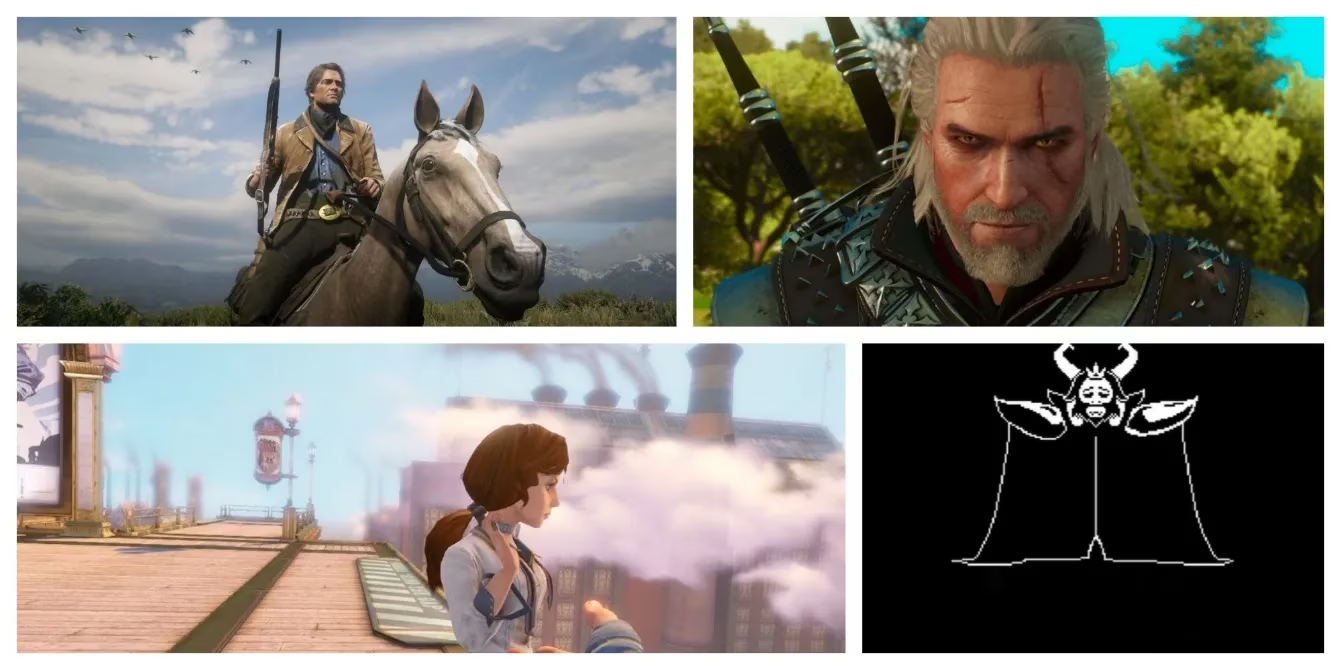
In Undertale, players control a child trapped in the Underground, a realm beneath Earth's surface, and face a unique choice: embrace violence for an easier path or adopt a Pacifist route to spare all monsters. Opting to save everyone by avoiding combat is a noble endeavor, but it dramatically increases the game's difficulty, requiring intricate strategies and patience. This approach transforms battles into puzzles, where mercy is a double-edged sword—protecting lives while sharpening the challenges ahead. The game's innovative mechanics highlight how the cost of universal kindness can be as taxing as the violence it seeks to avoid, making it a standout in indie gaming.
The Witcher 3: Wild Hunt: Moral Ambiguity in Velen
The Witcher 3 delivers a medieval epic where Geralt of Rivia navigates a world rife with tough choices, exemplified by the Whispering Hillock quest. Here, players must decide whether to free a Tree Spirit or kill it, with each option carrying dire consequences: saving it liberates children from the Crones but dooms a village, while destroying it spares the village but condemns the children. This dilemma is a microcosm of the game's broader themes, where no choice is purely good or evil, and saving one group invariably costs another. The quest underscores that in this rich narrative, the pursuit of universal salvation is as futile as building castles on shifting sands, destined to crumble under the weight of compromise.
BioShock Infinite: Sacrificing for a Multiverse
BioShock Infinite explores multiverse theory through Booker DeWitt's journey, culminating in a revelation that he is the architect of suffering across realities. To save countless lives, Booker must accept his own drowning, erasing his existence to prevent dystopian futures like Columbia and Rapture. This sacrifice is a grand act of redemption, where the cost of universal peace is personal annihilation—a concept as intricate as a clockwork mechanism that must be dismantled to stop time itself. The game's complex narrative demands multiple playthroughs to fully grasp, and as of 2025, it remains a thought-provoking masterpiece on the price of salvation.
Red Dead Redemption 2: Arthur Morgan's Final Stand
Red Dead Redemption 2 tells a Western tale of Arthur Morgan, whose terminal tuberculosis forces a selfless sacrifice to save John Marston's family. Despite being unable to rescue fallen comrades like Lenny or Shaun, Arthur's final act ensures others escape, embodying the cost of heroism through personal loss. This choice transforms his character arc, turning a hardened outlaw into a symbol of redemption, and highlights the game's immersive world where saving everyone is impossible, but partial salvation carries profound weight. 😊
Key Takeaways on the Cost of Saving Everyone
-
Emotional Toll: Each game demonstrates how saving lives often involves heartbreaking sacrifices, deepening player engagement.
-
Gameplay Impact: Choices affect difficulty, story outcomes, and sequels, making replays essential.
-
Moral Lessons: These narratives teach that altruism isn't free; it demands trade-offs that mirror real-world ethics.
In summary, video games like these masterfully illustrate that the quest to save everyone is a high-stakes gamble, where the cost can be as heavy as the rewards are fleeting. As technology evolves, these stories remain timeless, challenging players to confront the price of their virtual heroism.
Comments