Rockstar Games' Red Dead Redemption 2 is often celebrated for its immersive and authentic portrayal of the American West, creating a world that feels both grand and grounded. However, this dedication to a specific tone and historical sensitivity means that the game sometimes places intentional boundaries on player freedom, a notable departure from the studio's usual ethos of chaotic, near-limitless sandbox gameplay. While the Grand Theft Auto series thrives on amoral mayhem, RDR2 carves a different path, prioritizing narrative cohesion and respect over unrestricted player agency. Doesn't this careful curation of the experience, in fact, deepen the overall immersion rather than detract from it?
🏛️ The Closed Doors of the Church
One of the most consistent limitations players encounter in the vast open world of Red Dead Redemption 2 is the inaccessibility of active churches. While Arthur Morgan can wander into saloons, general stores, and even certain homes, the doors to functioning places of worship remain firmly shut. This design choice becomes apparent when exploring towns like Saint Denis or Valentine, where these prominent buildings serve only as detailed backdrops. Is it a missed opportunity for exploration, or a necessary narrative safeguard?
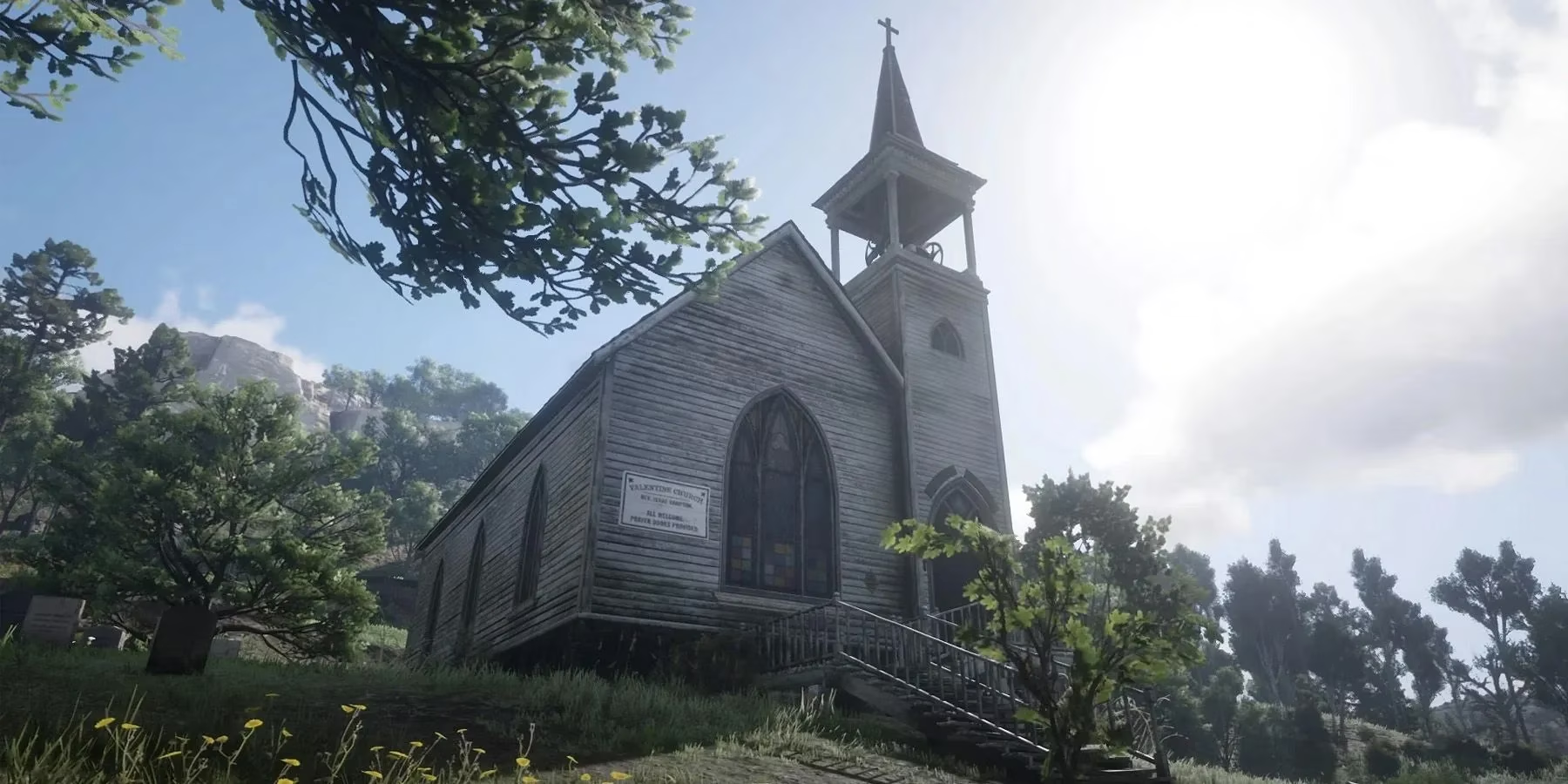
The reasoning behind this restriction is quite clear upon reflection. Allowing players to commit virtual massacres in a sacred space would inevitably spark significant controversy. Rockstar is no stranger to provocative content, as seen in franchises like Grand Theft Auto, but RDR2 aims for a more mature, reflective tone. The potential for juvenile, shock-value gameplay inside a church clashes with the game's goal of presenting a nuanced, albeit fictional, historical period. The studio likely determined that such freedom would be more disrespectful than beneficial to the experience they were crafting.
-
Where Faith Meets Gameplay: This doesn't mean religion is absent. Players can seek out the Abandoned Church in Bolger Glade or the Tiny Church in Lakay. These Points of Interest are exceptions that prove the rule, allowing for interaction precisely because they are ruins, not active sanctuaries. The Abandoned Church, for instance, might host a group of hostile Lemoyne Raiders, creating a combat scenario that feels contextually appropriate—fighting outlaws in a derelict building is a far cry from attacking congregants in a place of worship.
-
Completionist Incentives: These locations also offer tangible gameplay rewards, such as lockboxes and collectibles, providing a practical reason for players to visit without undermining the game's thematic boundaries.
🏕️ A Sanctuary of Peace: The Wapiti Reservation
A similar, yet even more pointed, restriction applies to the Wapiti Indian Reservation. Here, the game employs a different technical solution: players are automatically and forcibly holstered their weapons upon entering the territory. Drawing a gun is simply impossible. This limitation is arguably even more self-explanatory than the church rule. Why would Rockstar implement such a strict measure?
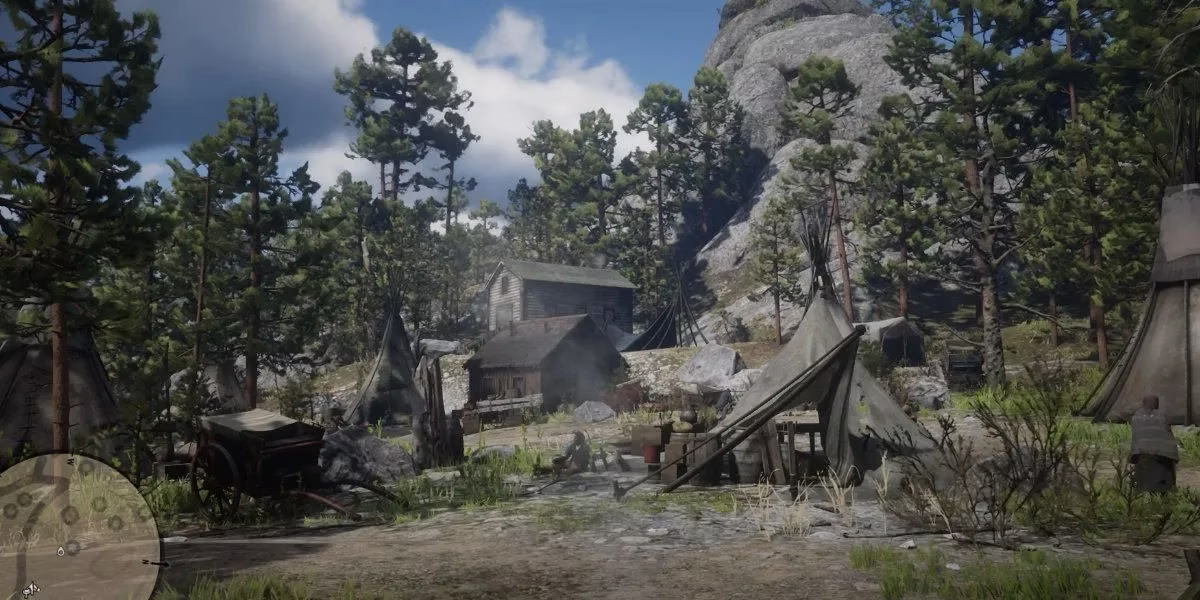
The answer lies in a painful historical context. The possibility of a player-initiated massacre on a Native American reservation would not only be broadly offensive but would also directly echo real-world atrocities like the Wounded Knee Massacre. By making the reservation a forced peaceful zone, Rockstar acknowledges this dark history and chooses not to trivialize it through interactive violence. The Wapiti storyline itself engages with the struggles and displacement of Native peoples in the era, and allowing gunplay there would fundamentally contradict the narrative's attempt at a more authentic and respectful portrayal.
| Location | Restriction | Primary Reason | Gameplay Alternative |
|---|---|---|---|
| Active Churches | Entirely inaccessible | Prevent disrespectful sacrilege & maintain tone | Explore abandoned church ruins |
| Wapiti Reservation | Weapons auto-holstered | Avoid referencing historical atrocities & support narrative | Engage in peaceful story missions & dialogue |
🔄 Evolving Sensibilities: From Red Dead Redemption to RDR2
The approach taken in the 2026-revered sequel marks a significant evolution from the original Red Dead Redemption. The first game, released over eight years prior, operated with a different sensibility. Heavily influenced by the irreverent and dramatic style of spaghetti westerns—and sharing more DNA with Grand Theft Auto's cheeky tone—the original Red Dead Redemption featured accessible churches and more flippant content.
This tonal shift highlights Rockstar's maturation in handling sensitive themes. For example, the first game included an achievement called "Manifest Destiny" for killing all the buffalo on the Great Plains, a move that lightly referenced the ecological and cultural tragedy of the buffalo's near-extinction. In today's climate, and certainly in the context of RDR2's design, such a feature would likely be reconsidered. The sequel represents a move toward the revisionist western genre, which tends to deconstruct the myths of the Old West with greater historical scrutiny and moral complexity.
🎯 The Balance of Freedom and Respect
So, do these limitations harm the "open-world" promise of Red Dead Redemption 2? For most players and critics, the answer has been a resounding no. The game's critical and audience acclaim remains undented by these specific boundaries. This demonstrates that unlimited freedom is not the sole ingredient for a compelling open world. Instead, consistency of tone, narrative depth, and thoughtful world-building are equally, if not more, important.
Rockstar's decision showcases a studio thinking carefully about the experience it wants to deliver. Red Dead Redemption 2 aims to be an engaging, beautiful, and sometimes brutally honest period piece, not a playground for indiscriminate violence. The restrictions on churches and reservations aren't arbitrary; they are integral to maintaining the game's dignified, atmospheric, and respectful approach to its setting and subject matter. As the gaming landscape continues to evolve, RDR2 stands as a testament to how strategic limitations can, paradoxically, create a richer and more immersive virtual world. The studio's ability to be goofy and over-the-top remains intact, as seen in other franchises, but here, it was channeled into a different, more appropriate container. After all, isn't true immersion about believing in the world's rules, even when they limit our own power?
Comments